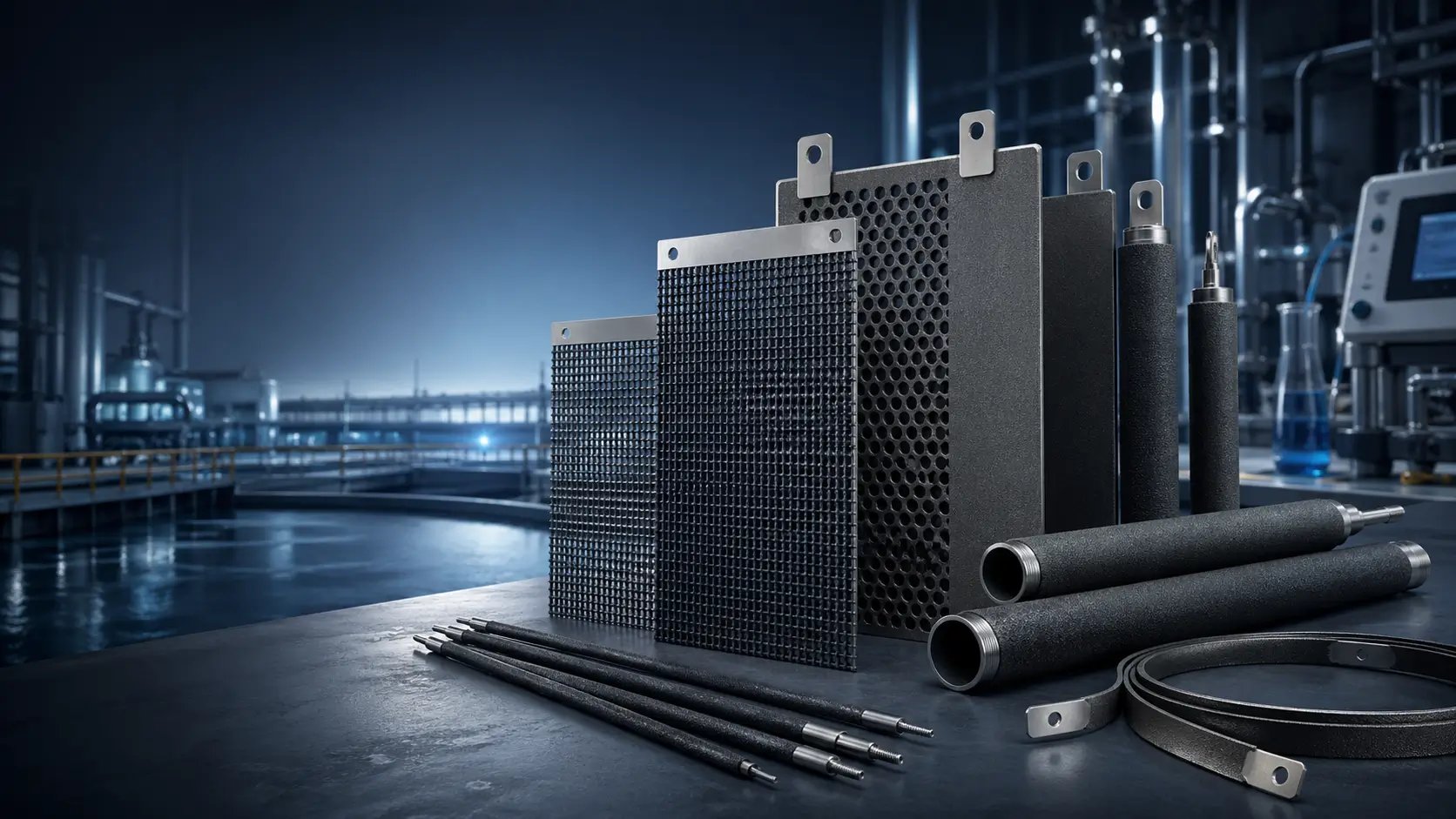
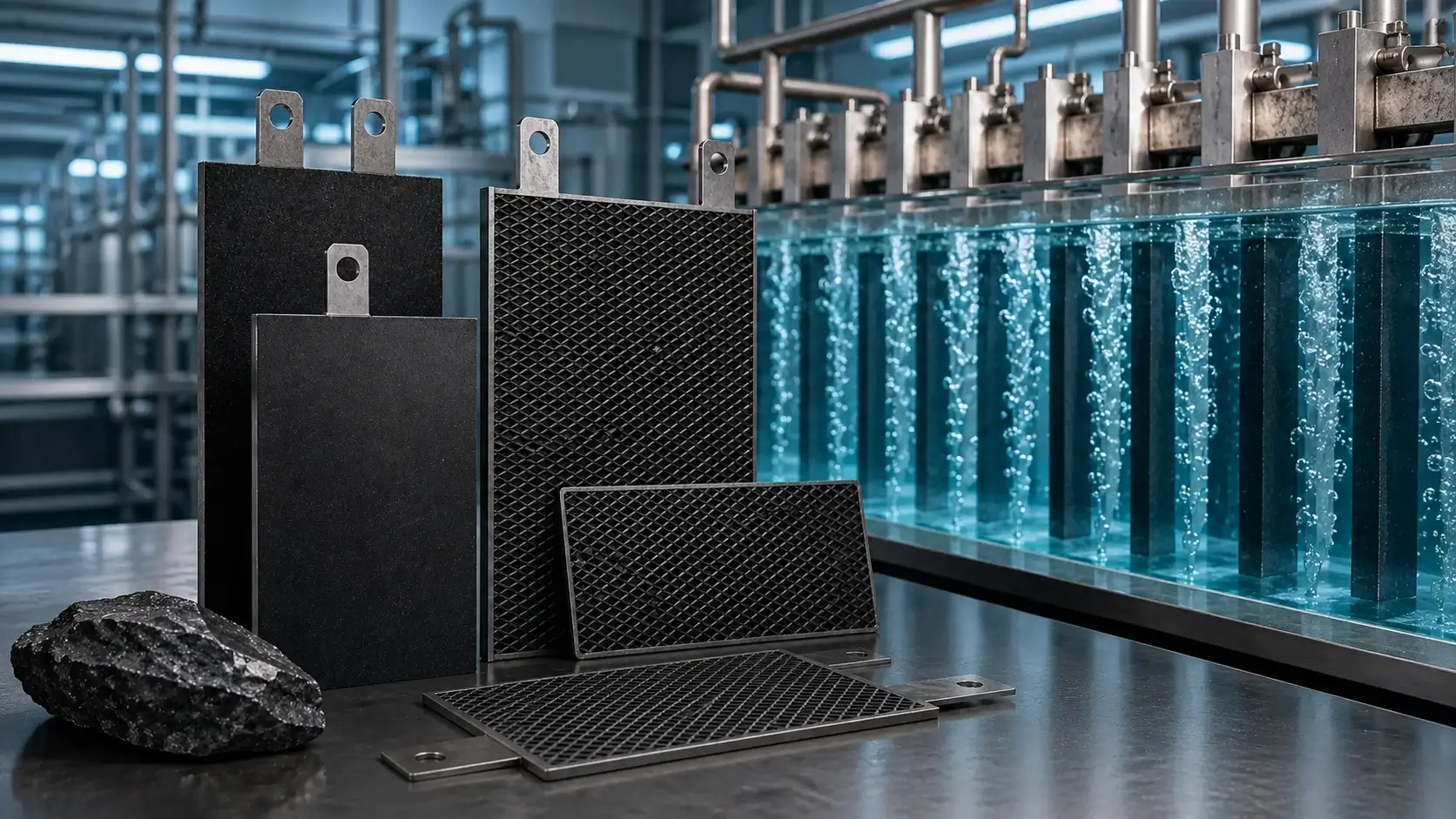
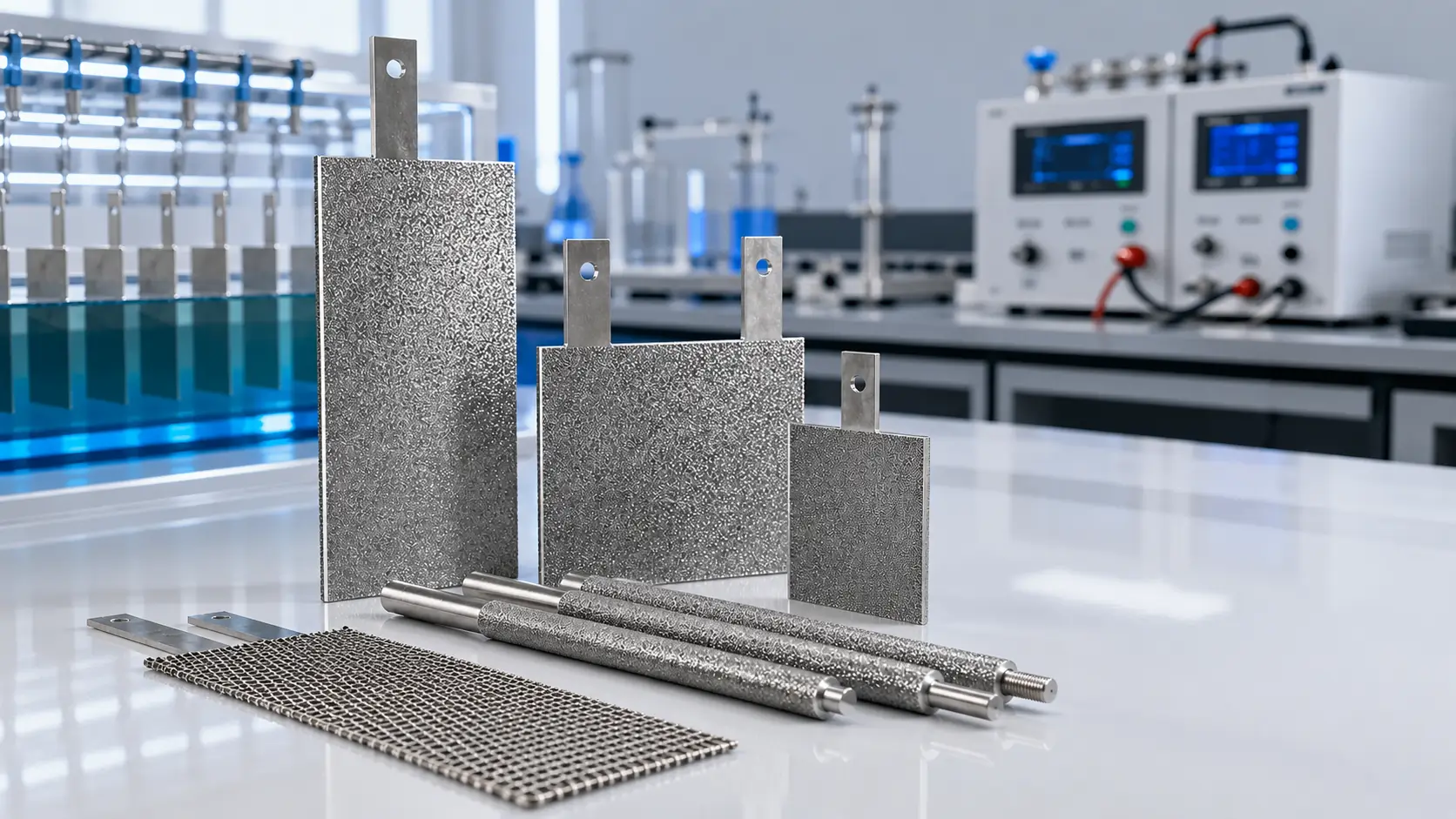
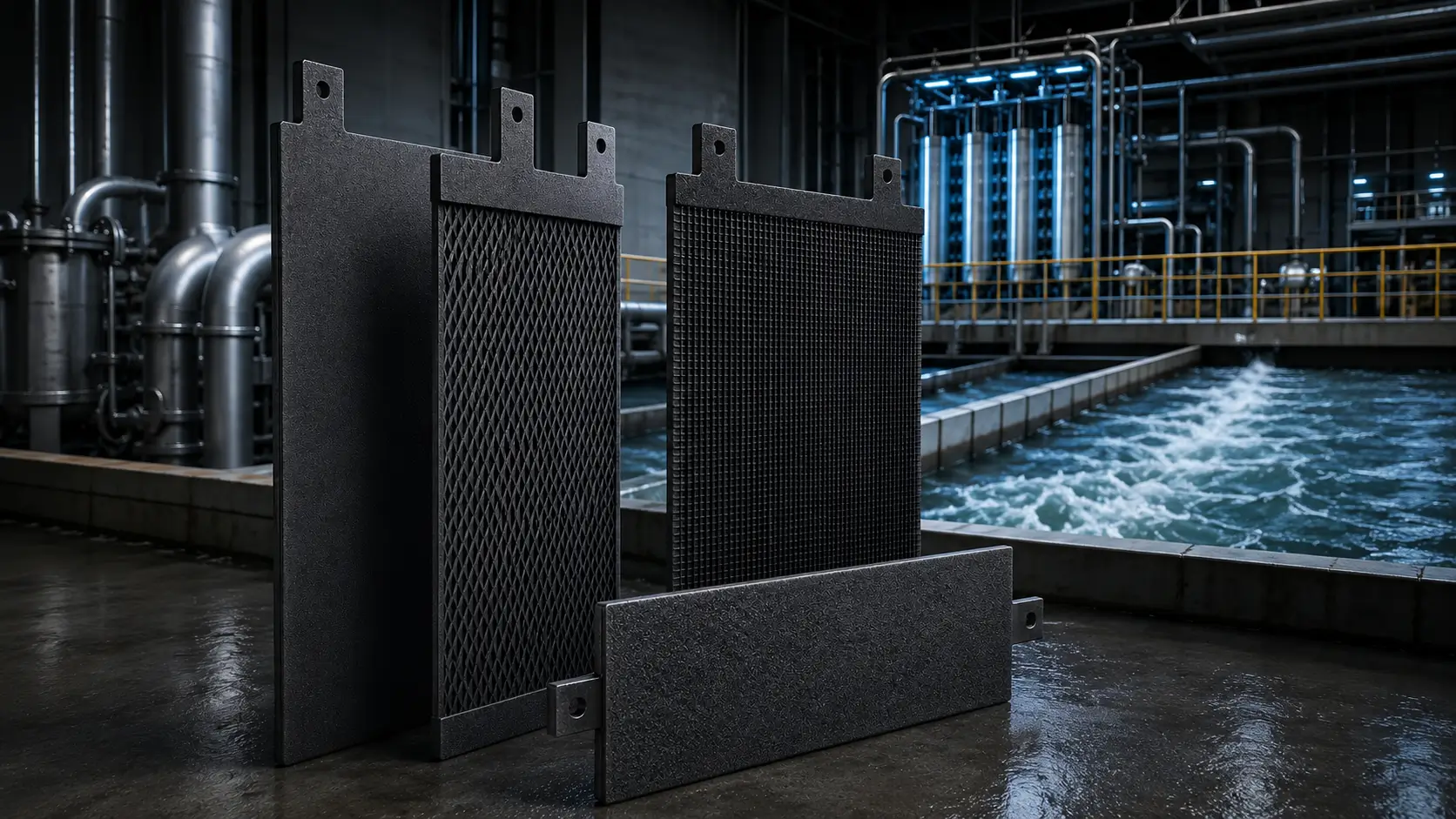
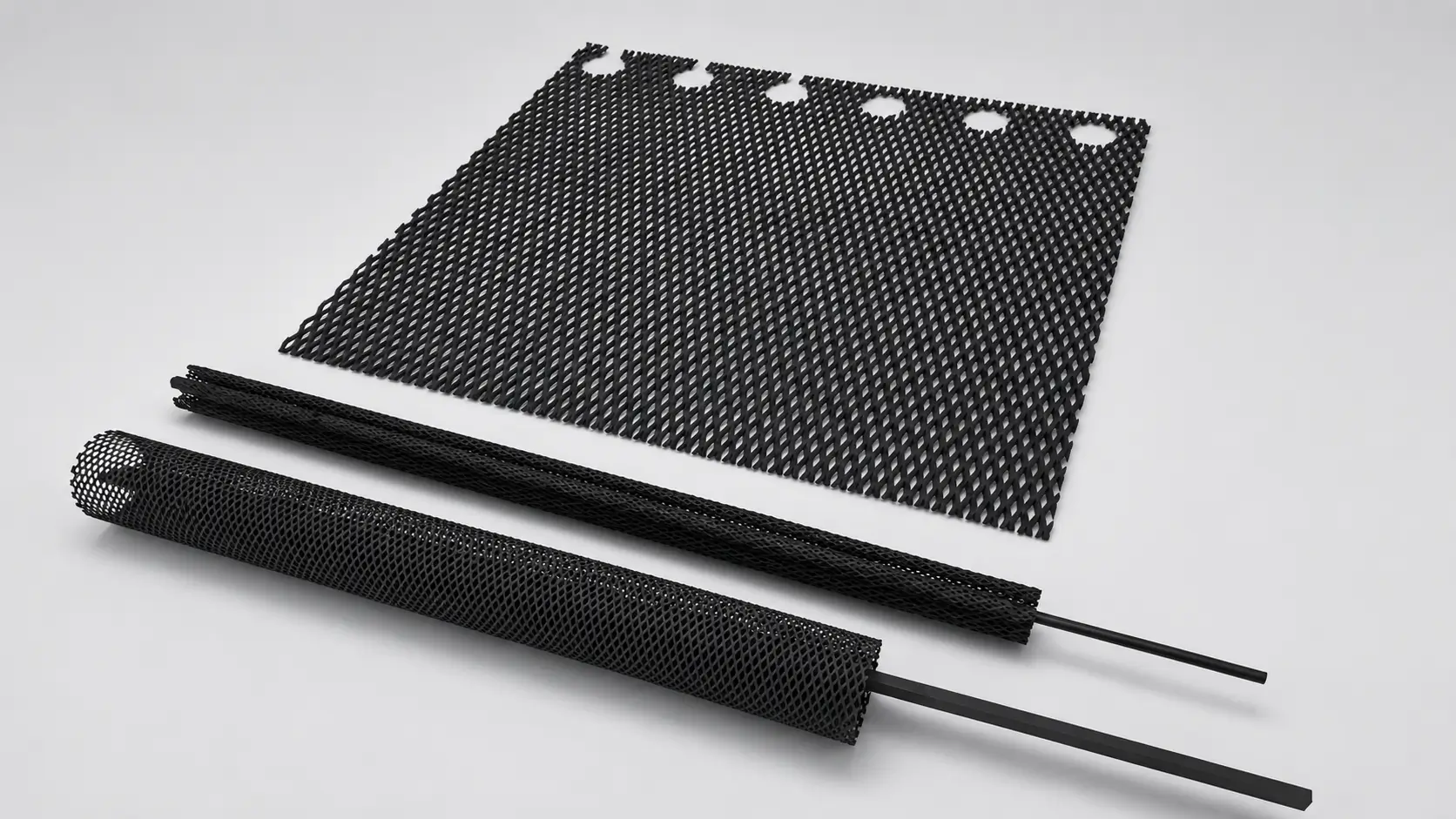
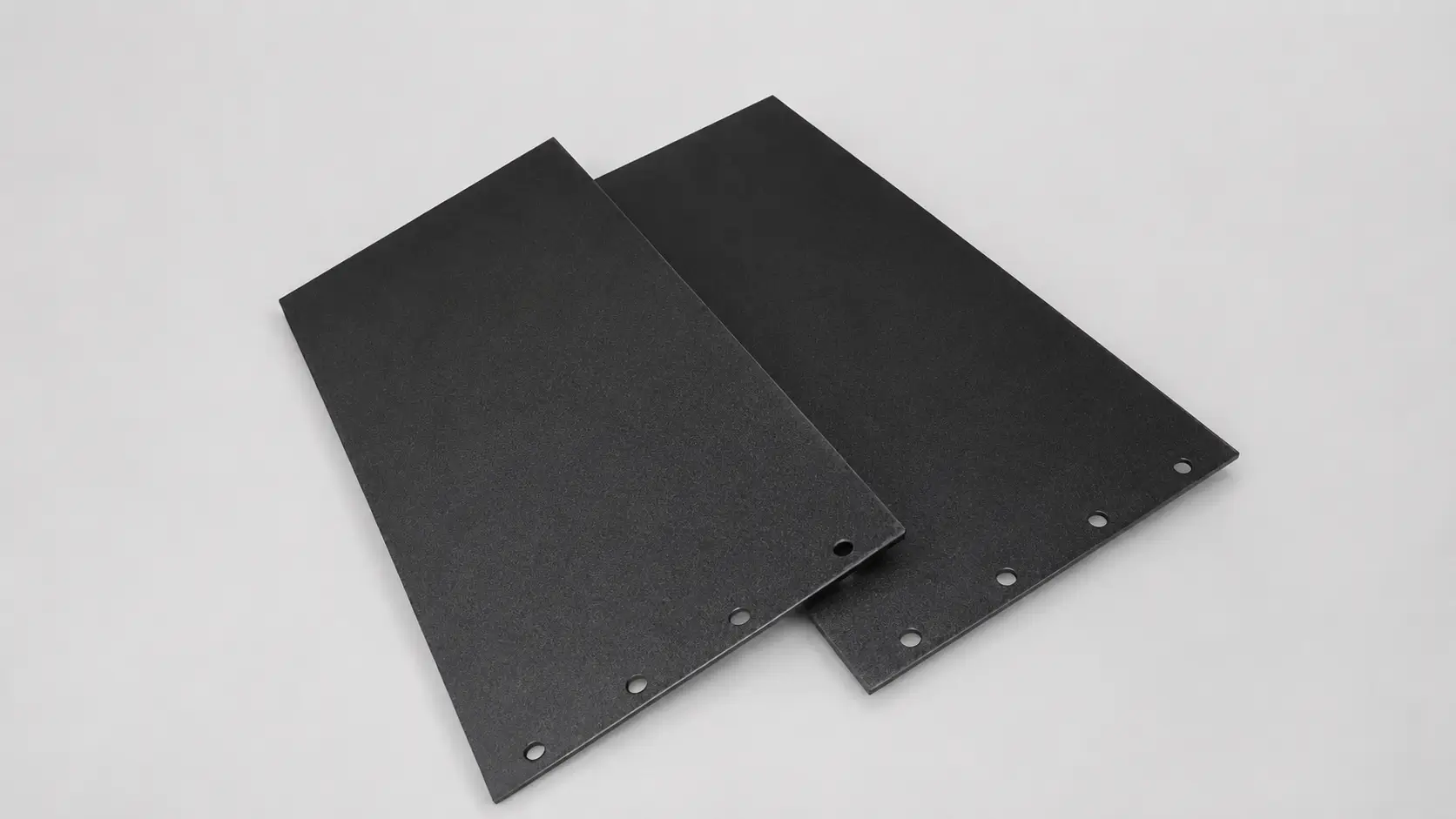
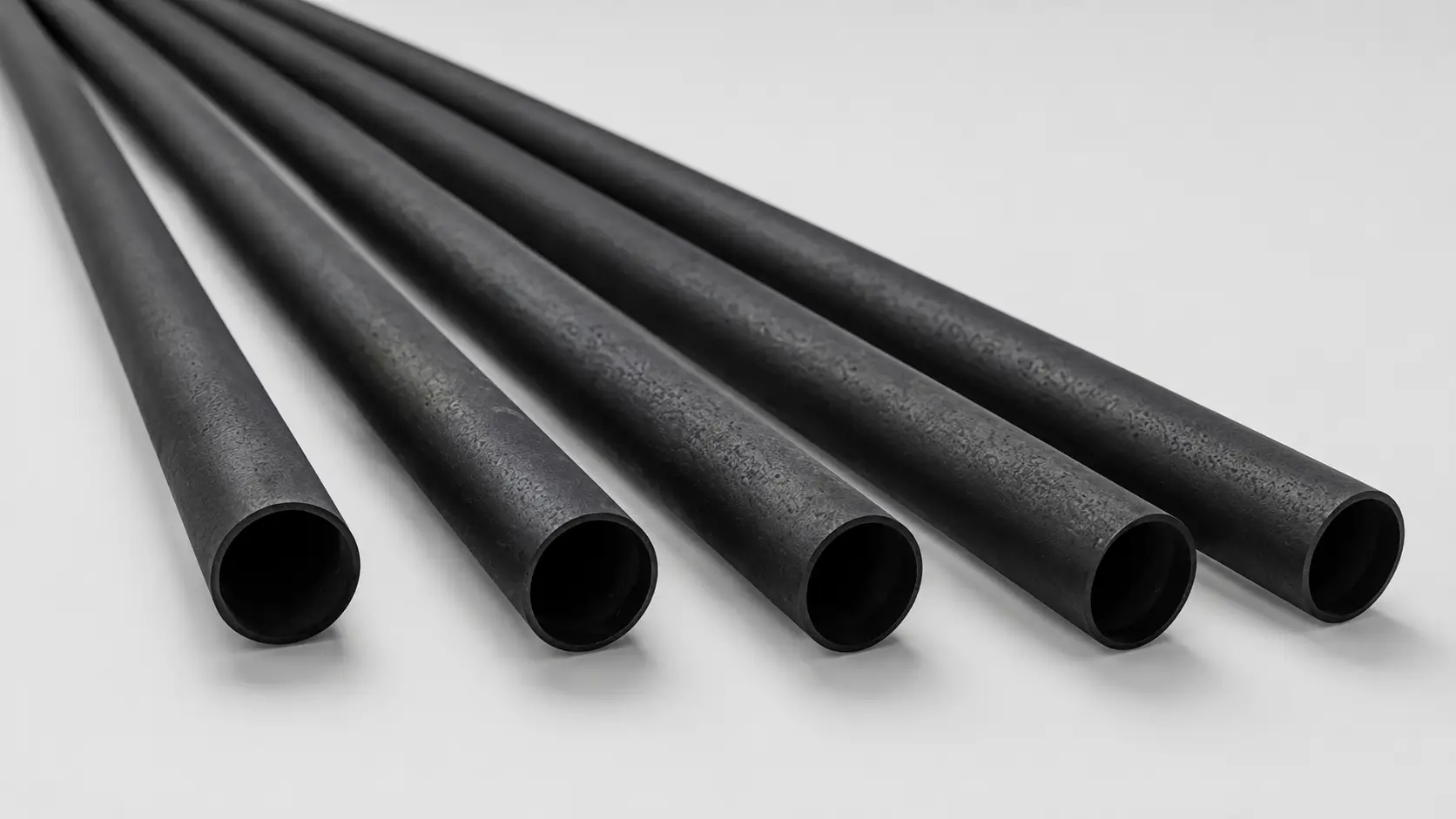
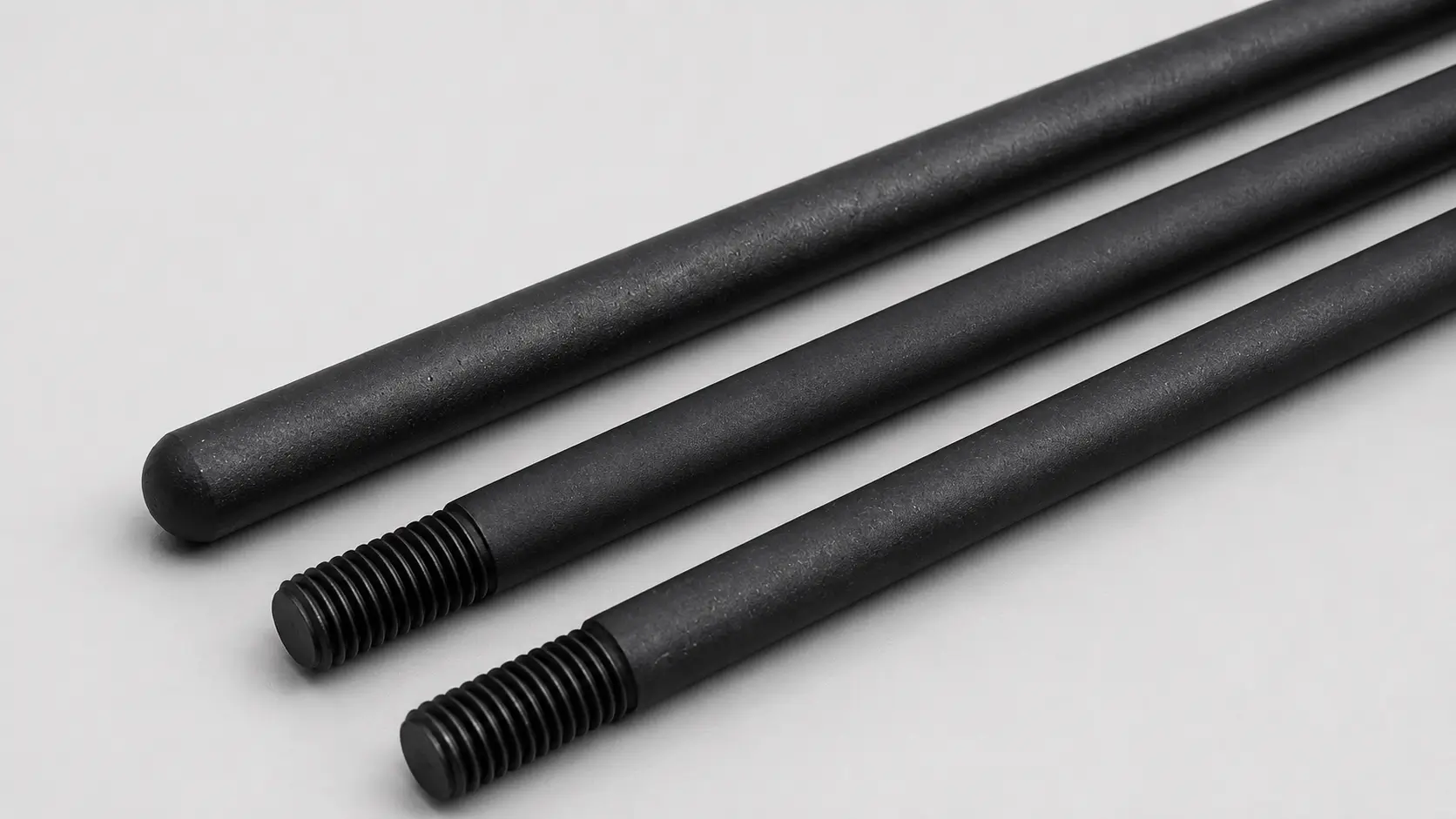
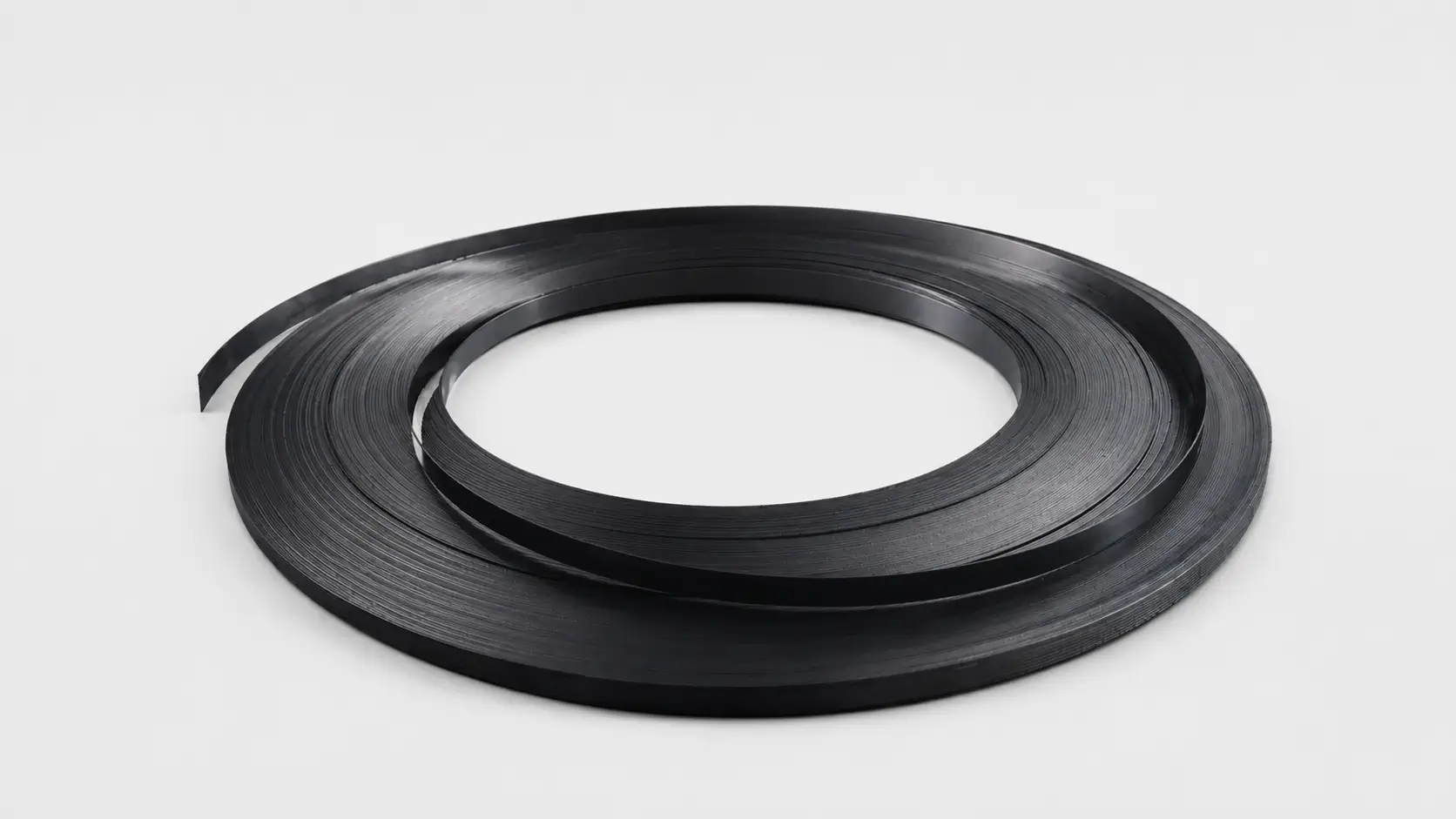
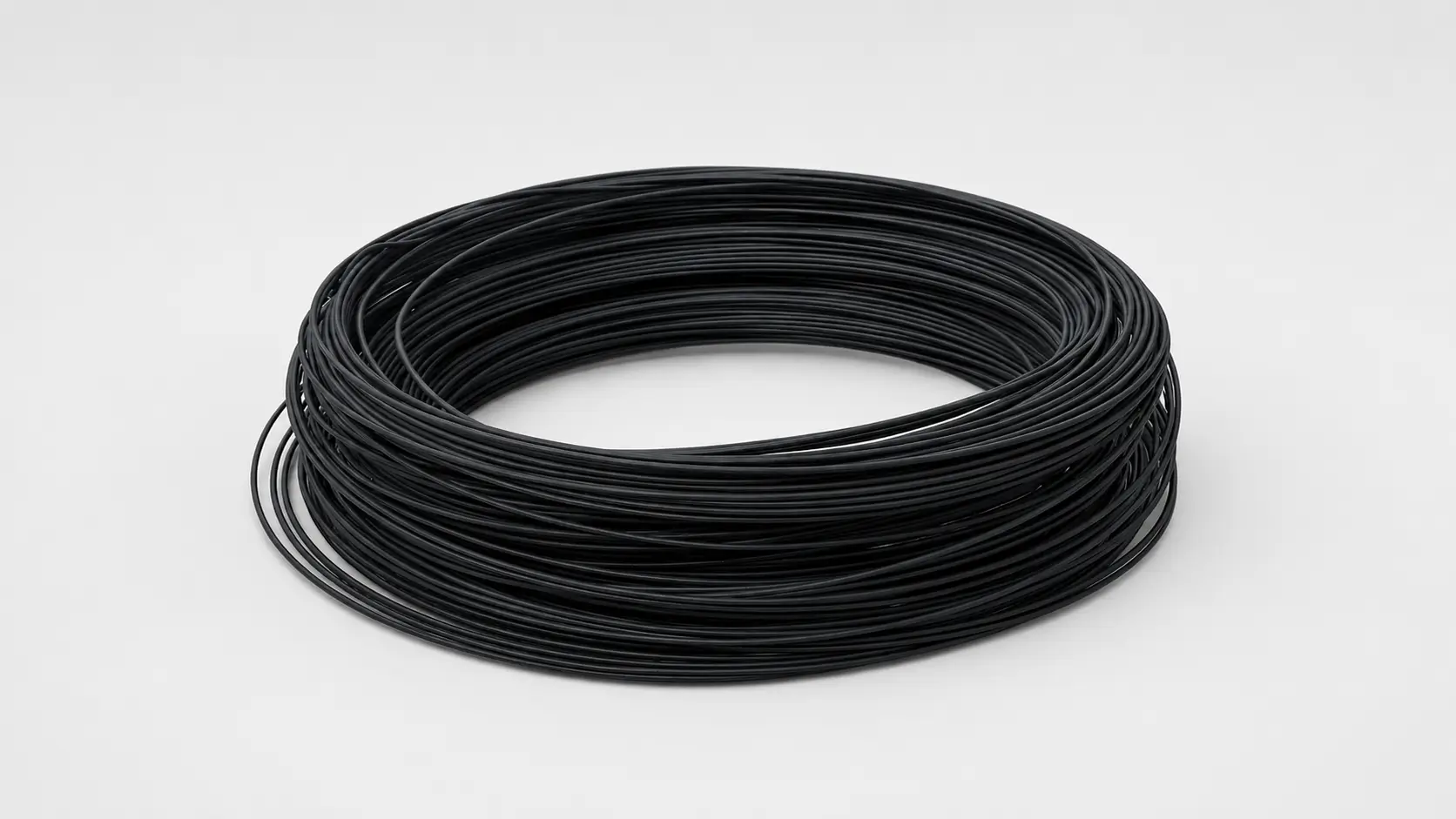
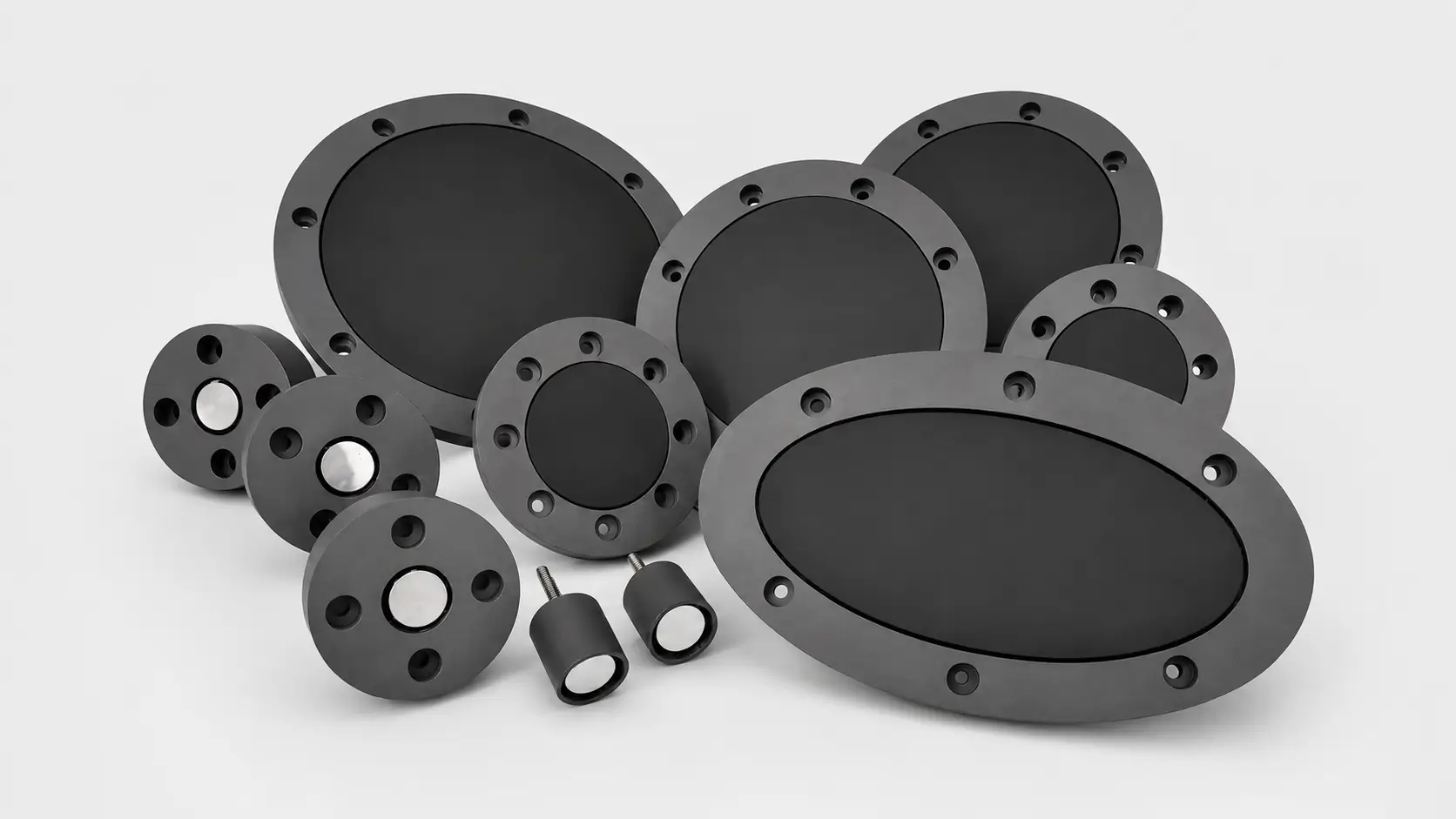
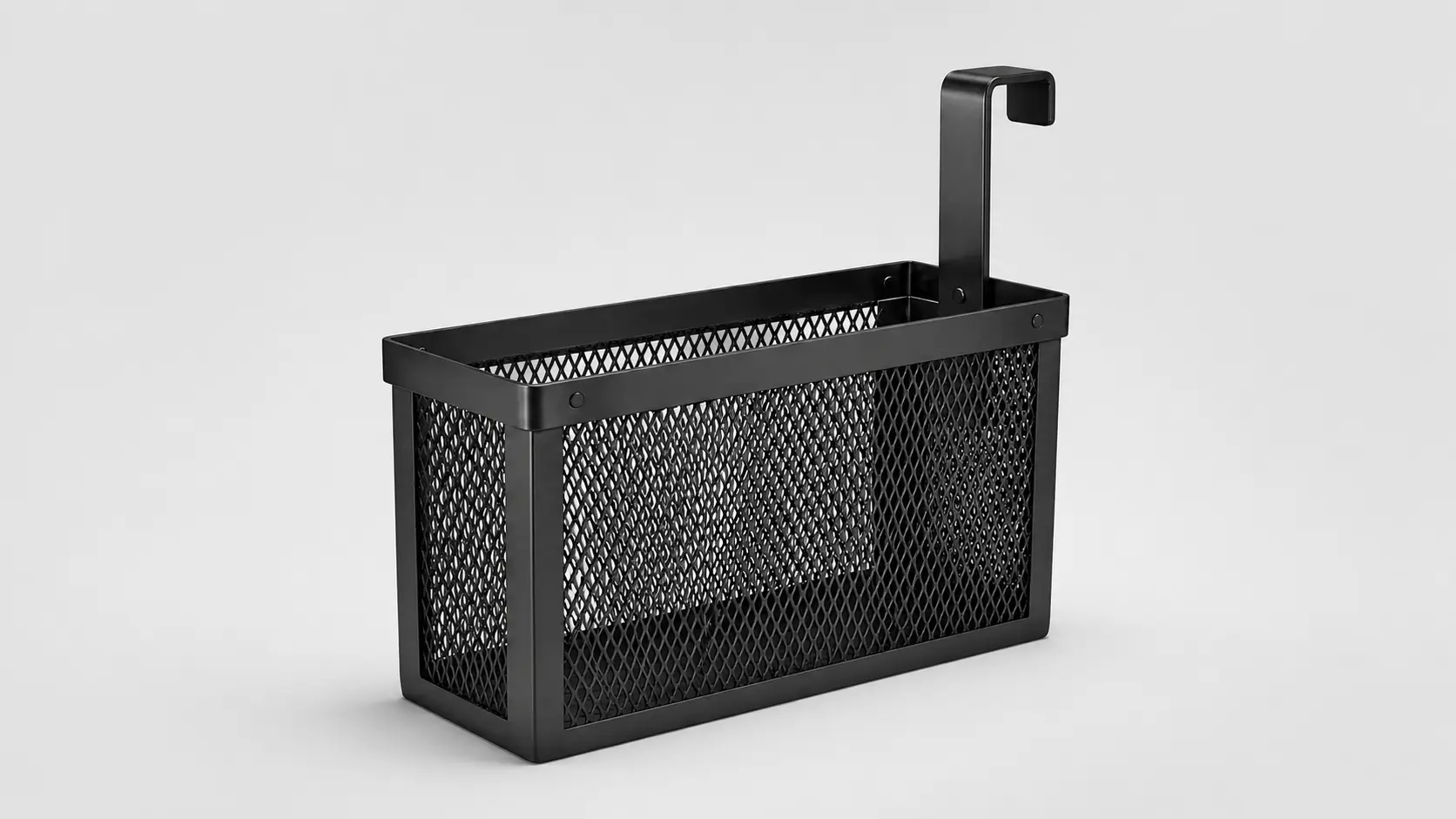
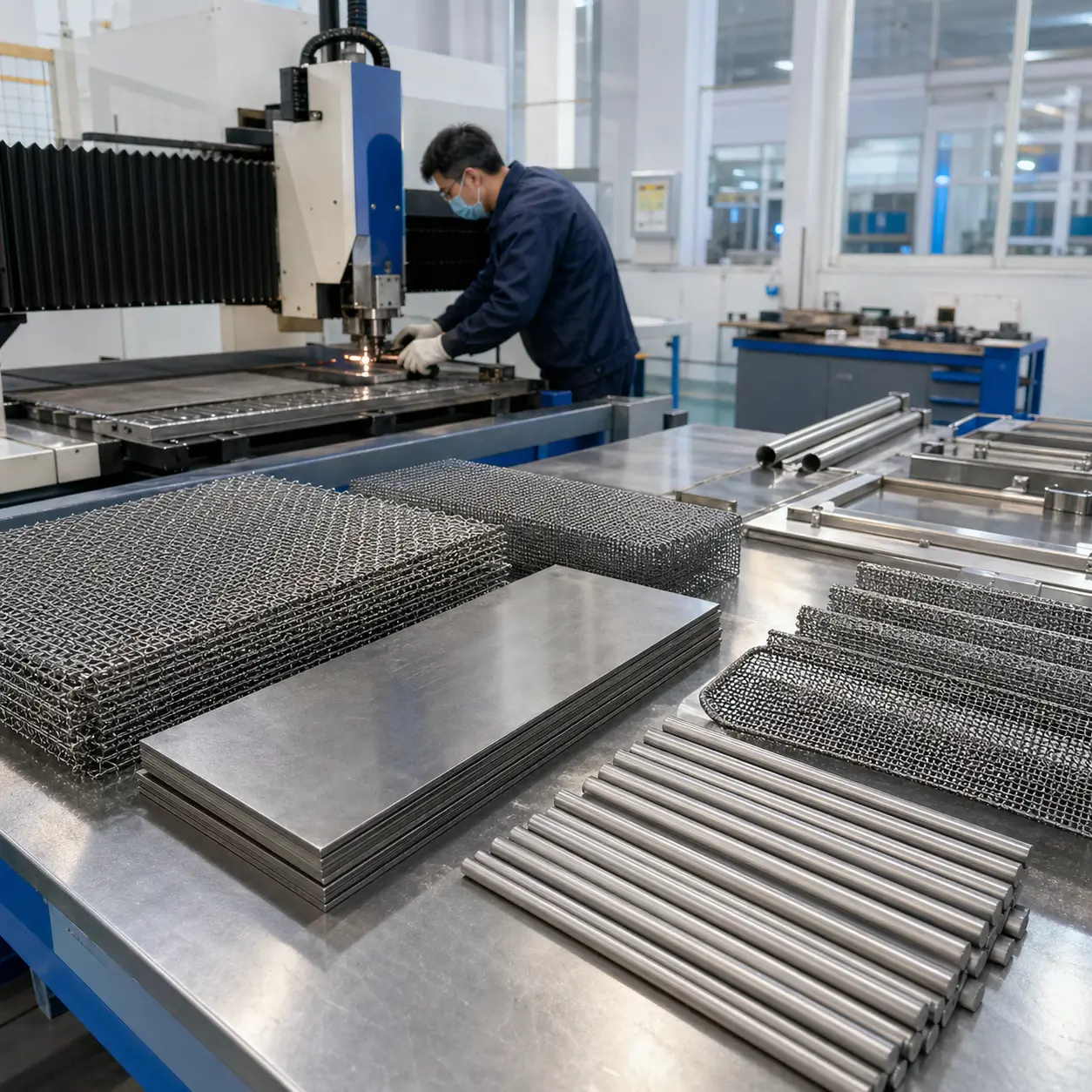
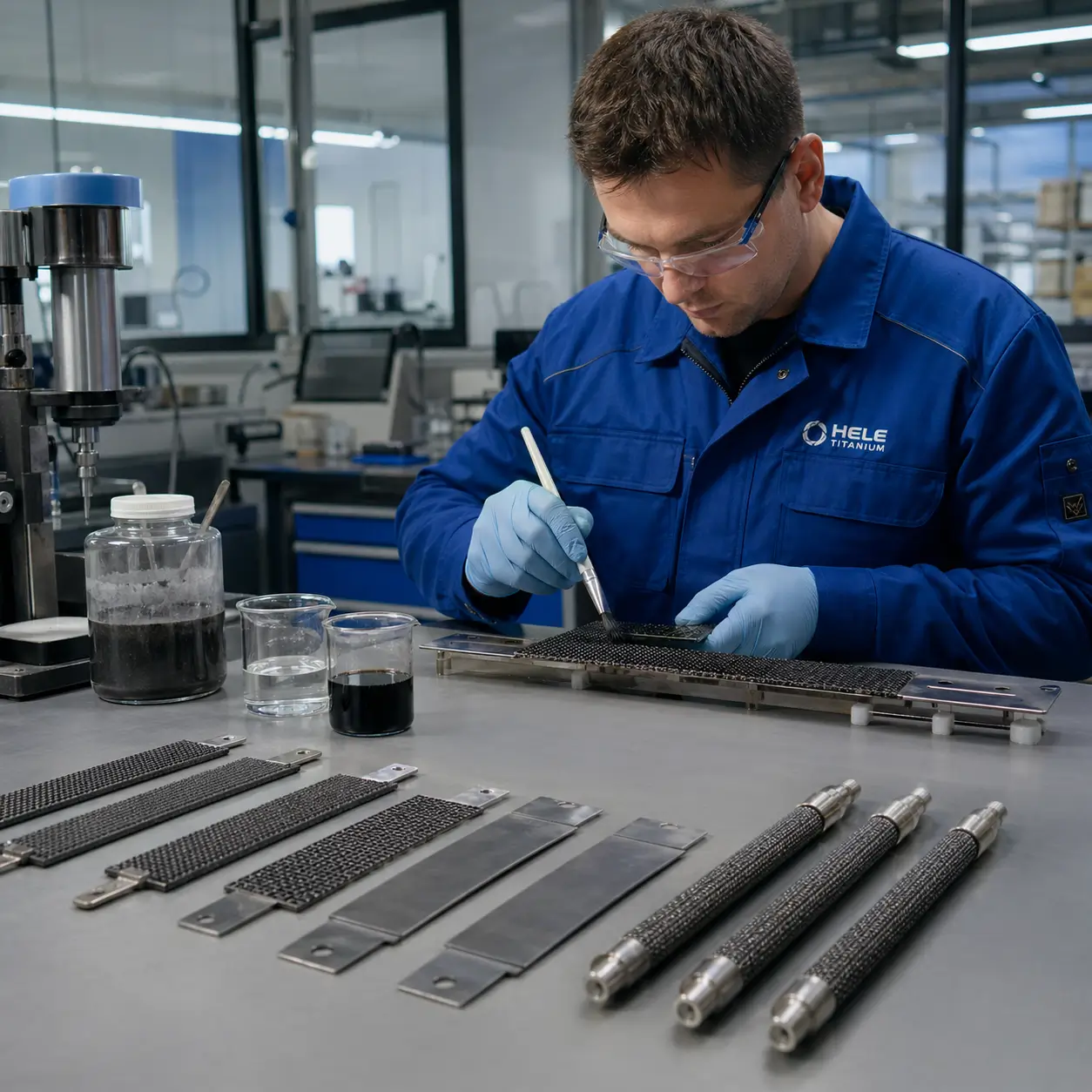

Multiple Titanium Anode Forms - Mesh, Plate, Tube, Basket, Custom Assemblies
TITANIUM ANODE SOLUTIONS

Titanium Anodes Manufacturer
for Electrochemical &
Cathodic Protection Systems

Custom MMO, platinized, and specialty coated titanium anodes engineered for electrolysis, cathodic protection, water treatment, electrowinning, and other industrial electrochemical systems..

MMO / Ru-Ir / Ir-Ta / IrO₂
Platinized Titanium Options
Electrolysis & CP Applications
Mesh / Plate / Tube / Basket
Custom OEM Anodes
Request Titanium Anode Selection Support
Custom Anode Engineering

Custom-Engineered Titanium Anodes
for Your Exact Electrochemical Process

The right coating lowers cell voltage. The wrong coating shortens service life.

Off-the-shelf anodes often fail early when coating chemistry, electrolyte, current density, temperature, pH, and cell geometry are not correctly matched. This can lead to high cell voltage, increased energy consumption, and shortened service life.

Hele Titanium engineers MMO, DSA, Pt/Ti, PbO₂, and specialty coated titanium anodes around real operating conditions. We support coating selection, titanium substrate preparation, custom geometry, inspection, and documentation according to project requirements.

Coating Selection by Reaction

Match coating chemistry to electrolyte and reaction type.

Current Density Matching

Review current distribution and reduce hot spots.

Geometry-Based Design

Customize mesh, plate, tube, rod, or mixed structures.

XRF & ALT Verification

Verification can be supported before

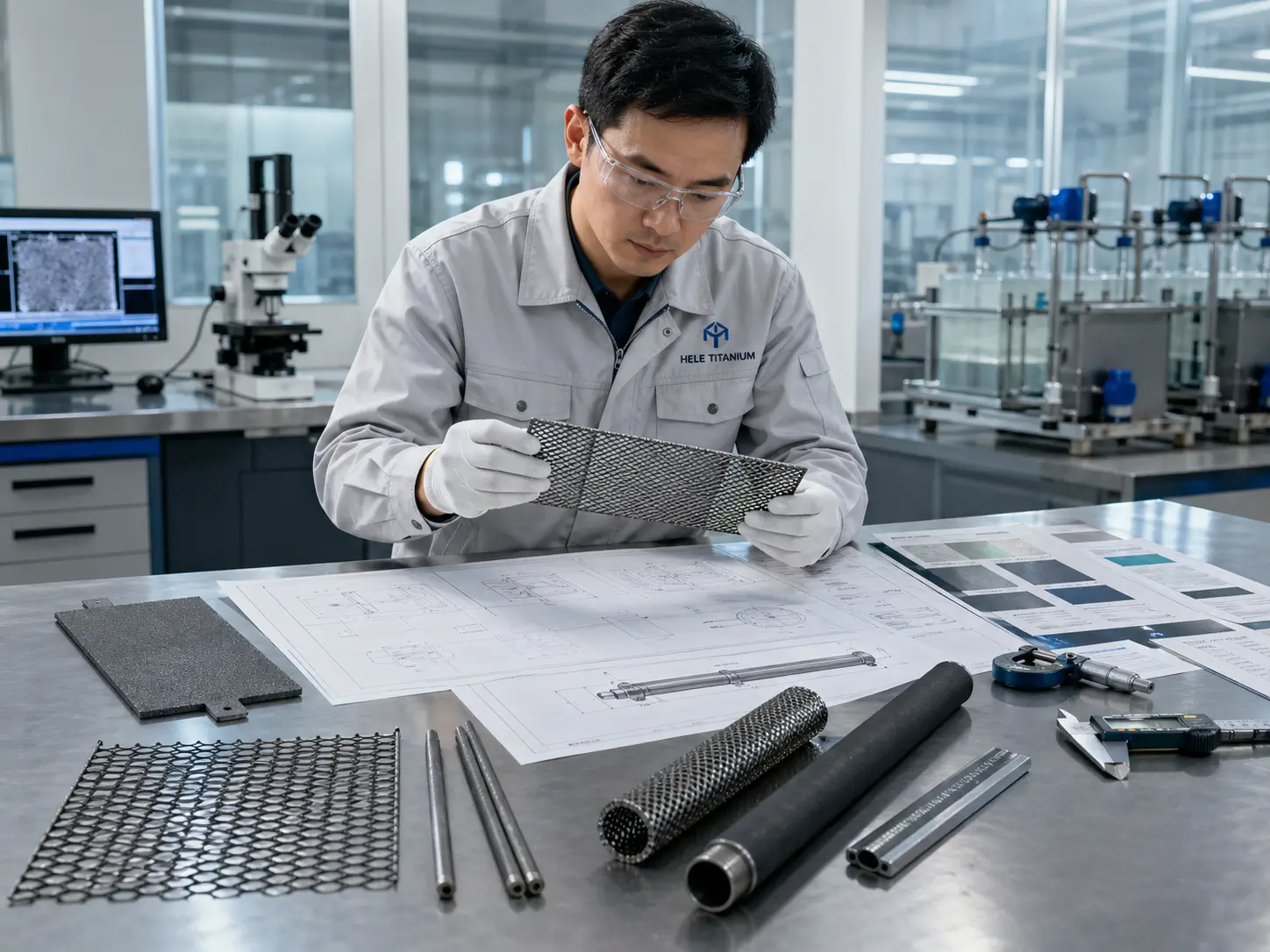
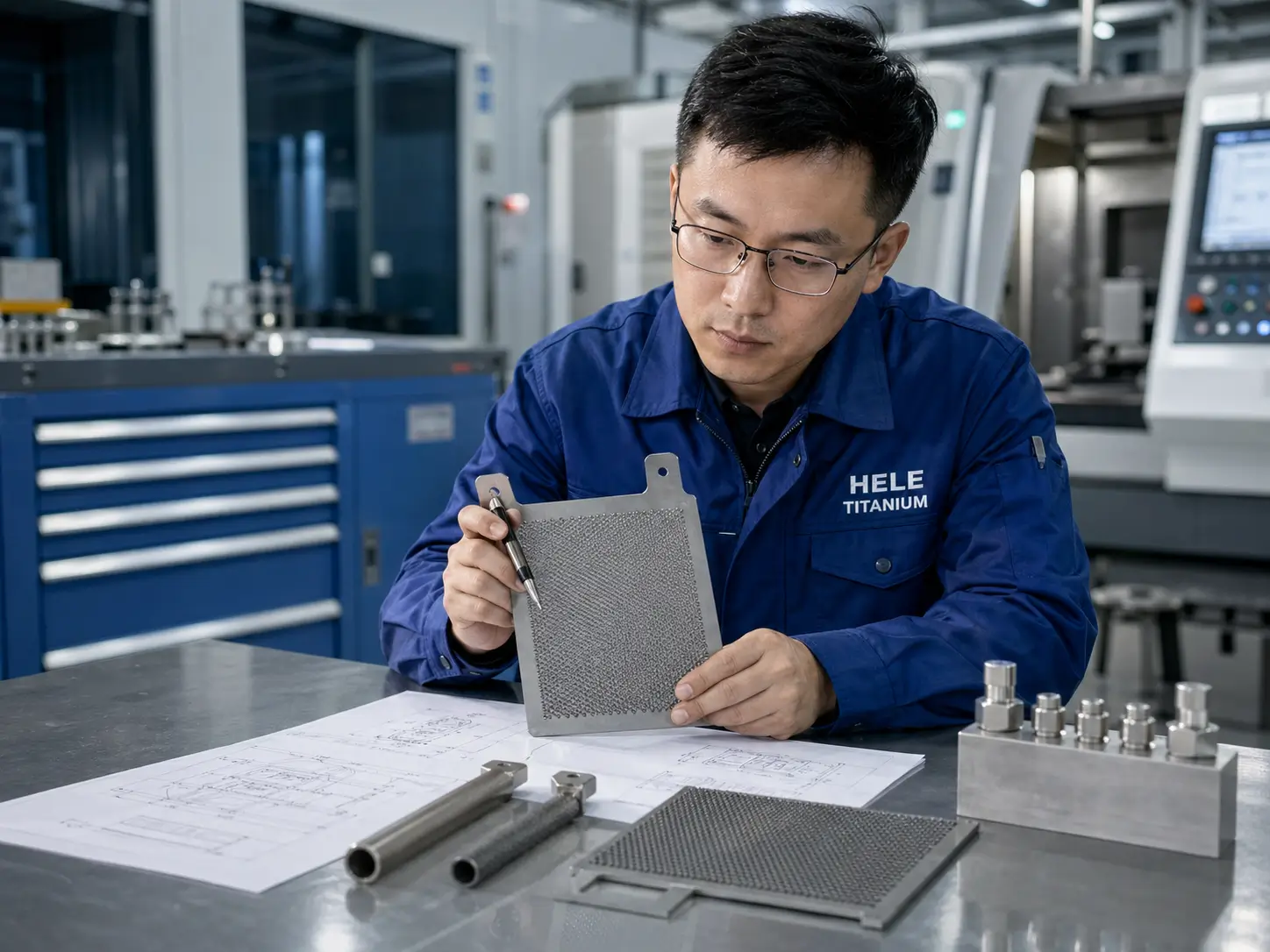
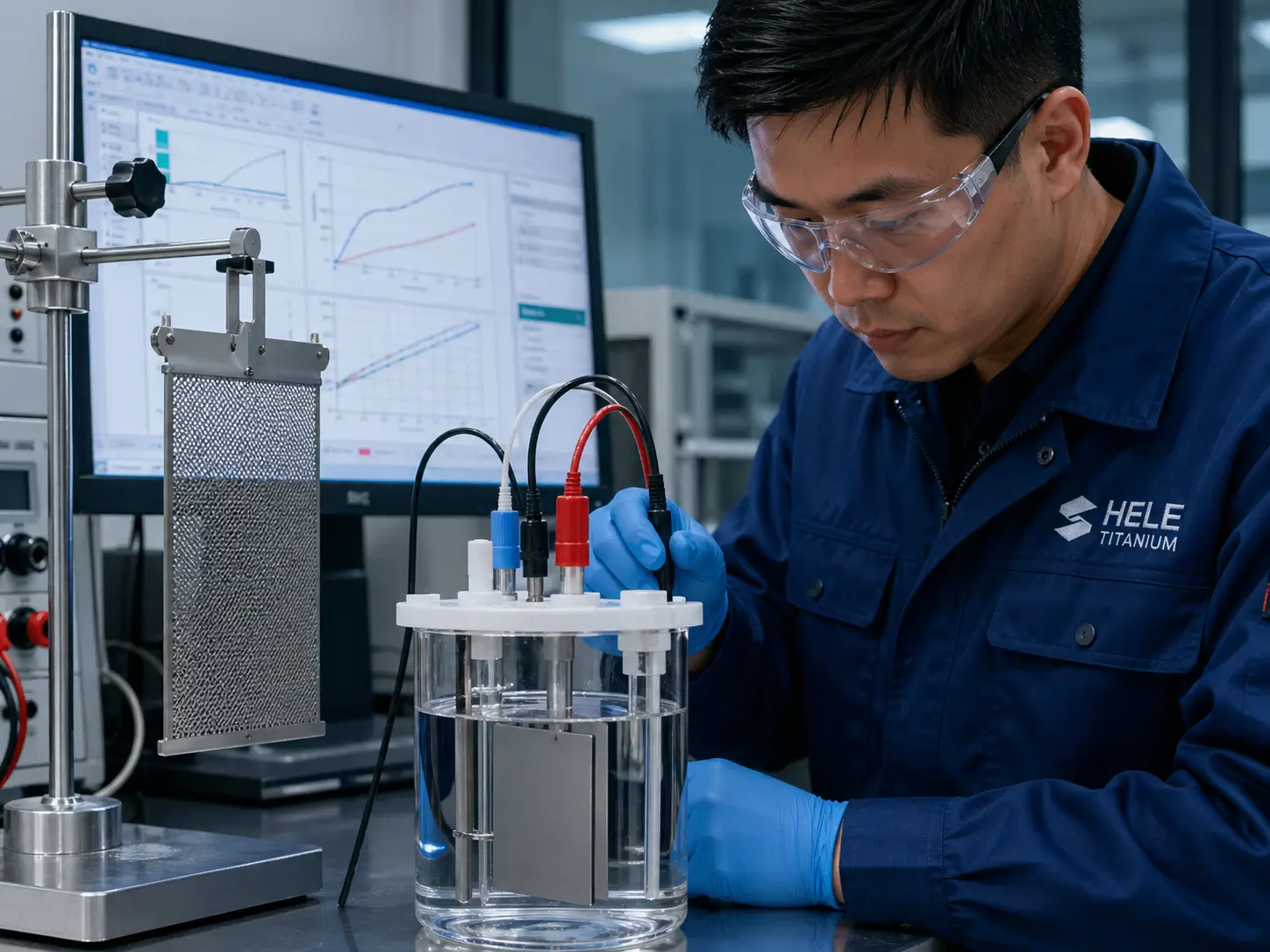
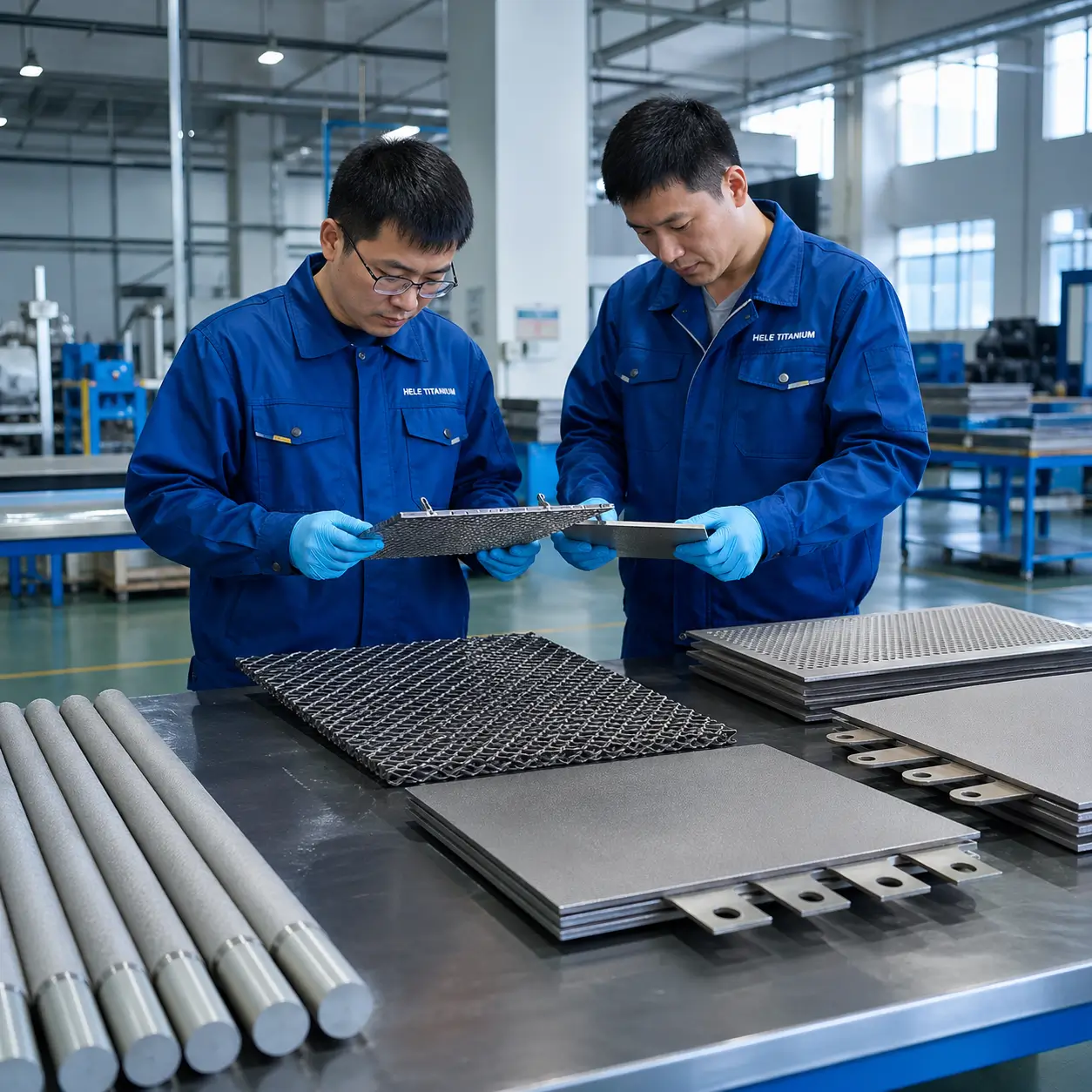
Chinese engineer inspecting MMO titanium anodes in laboratory
Engineering Review

Custom Coating Design

Tailored to your process

XRF Verification

Coating review when required

Batch Documentation

Records based on order requirements

Designed for: chlorine generation, electrowinning, plating, wastewater treatment, and cathodic protection.

Choose Titanium Anodes by Coating Chemistry

Different electrochemical processes require different coating systems. The right titanium anode coating should be selected according to electrolyte chemistry, target reaction, current density, operating temperature, required service life, and process environment.

Ru-Ir Coated Anodes

Ruthenium-Iridium MMO Anodes

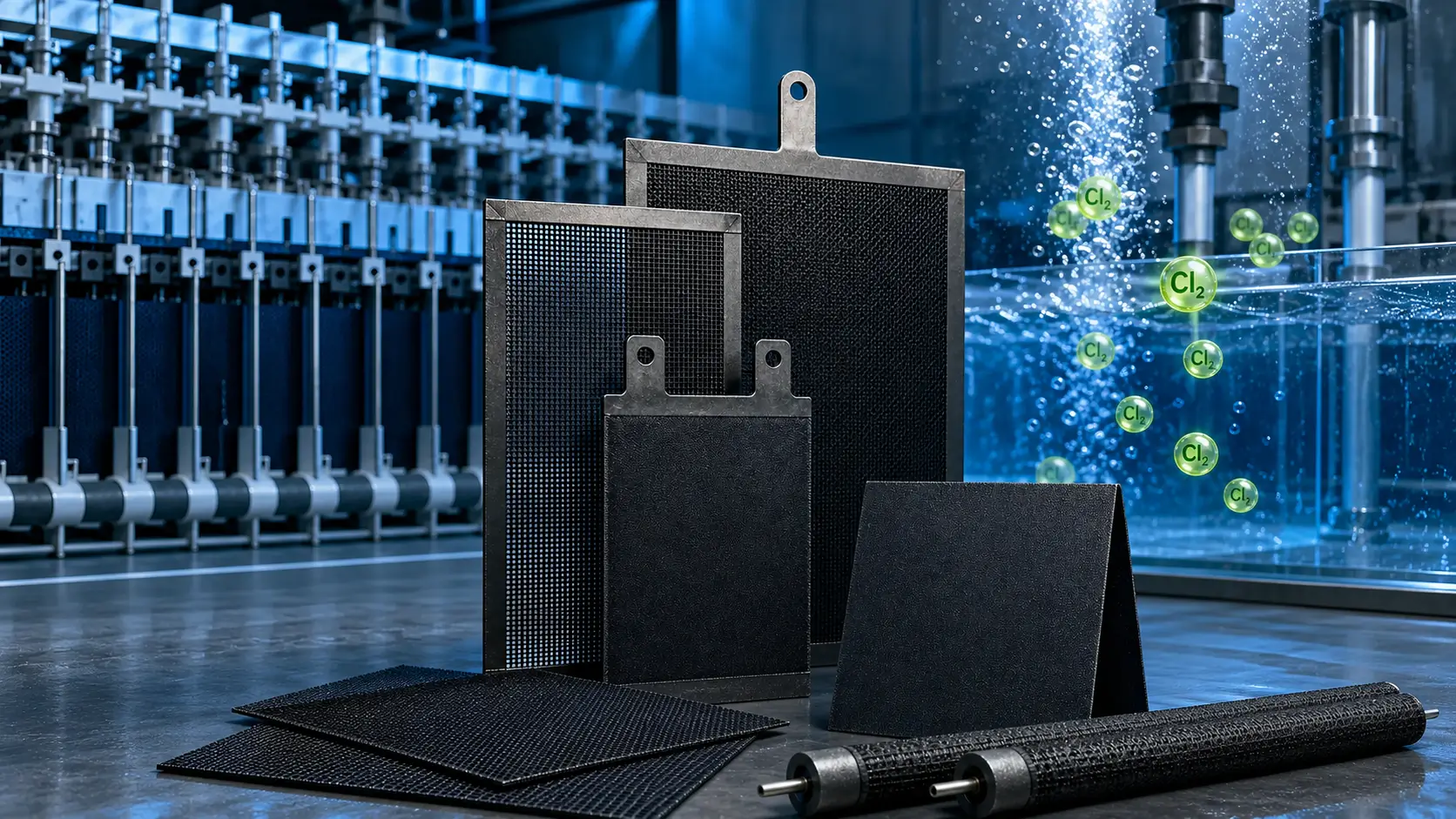
  • Best For Chlorine evolution, electrochlorination, saltwater systems, sodium hypochlorite generation, and some wastewater applications.
  • Typical Forms Plate, mesh, tube, rod, wire, and custom assemblies.
  • Key Selection Factors Chloride concentration, current density, pH, operating temperature, and design life.
Ir-Ta Coated Anodes

Iridium-Tantalum MMO Anodes

  • Best For Oxygen evolution, cathodic protection, acidic environments, electrolysis, water treatment, and high-stability applications.
  • Typical Forms Tubular, ribbon, mesh, plate, rod, and canisterized assemblies.
  • Key Selection Factors Electrolyte chemistry, oxygen evolution potential, soil / seawater environment, current output, and service life.
Platinized Titanium Anodes

Platinized Titanium Anodes

  • Best For Precision electrochemical processes, electroplating, laboratory systems, high-purity applications, and selected electrolysis processes.
  • Typical Forms Plate, mesh, rod, wire, tube, disc, and custom shapes.
  • Key Selection Factors Platinum layer thickness, current density, electrolyte compatibility, polarity, and surface area.
PbO2 Coated Anodes

PbO₂ Coated Anodes

  • Best For Wastewater treatment, hydrometallurgy, advanced oxidation, and refractory organic breakdown.
  • Typical Forms Plate, mesh, tube, rod, and custom shapes.
  • Key Selection Factors High oxygen overpotential, aggressive conditions, and powerful oxidation capacity requirements.

Final coating selection should be confirmed based on electrolyte chemistry, current density, temperature, and service life requirements.

Titanium Anode Forms & Custom Structures

Titanium anodes can be manufactured in different forms to match current distribution, installation space, electrolyte flow, system geometry, and electrical connection requirements.

Titanium Mesh Anodes

Titanium Mesh Anodes

Best For

High surface area, uniform current distribution, electrolysis cells, water treatment, and electrochemical reactors.

Customization

Mesh size, thickness, coating type, frame, tab, cable, and connection design.

View Mesh Anodes
Titanium Plate Anodes

Titanium Plate Anodes

Best For

Flat cell systems, electroplating, electrowinning, water treatment, and general electrolysis.

Customization

Plate size, thickness, hole pattern, coating area, mounting hole, and connection tab.

View Plate Anodes
Titanium Tubular Anodes

Titanium Tubular Anodes

Best For

Cathodic protection, offshore systems, seawater applications, deepwell systems, and long-life current output.

Customization

Tube size, length, coating area, cable connection, end cap, and canisterized design.

View Tubular Anodes
Titanium Rod Anodes

Titanium Rod Anodes

Best For

Compact systems, laboratory cells, electroplating, water treatment, and small electrochemical reactors.

Customization

Diameter, length, coating area, thread, cable, and mounting design.

View Rod Anodes
Titanium Ribbon Anodes

Titanium Ribbon Anodes

Best For

Reinforced concrete cathodic protection, tank bottoms, and distributed current applications.

Customization

Ribbon width, thickness, coating loading, spacing, and connection design.

View Ribbon Anodes
Titanium Wire / Coil Anodes

Titanium Wire / Coil Anodes

Best For

Small cells, compact electrolyzers, electrochemical testing, and custom assemblies.

Customization

Wire diameter, coil size, shape, coating type, and electrical connection.

View Wire Anodes
Disc / Round Titanium Anodes

Disc / Round Titanium Anodes

Best For

Laboratory systems, sensors, electrochemical cells, and compact equipment.

Customization

Diameter, thickness, coating type, mounting, and surface area.

View Disc Anodes
Custom Titanium Electrode Assemblies

Custom Titanium Electrode Assemblies

Best For

OEM systems, special reactors, PEM-related parts, industrial electrochemical equipment, and prototype development.

Customization

Drawing-based geometry, welding, machining, coating, assembly, testing, and documentation.

View Custom Assemblies

Plan Titanium Anodes by Application

Application conditions determine the right coating chemistry, anode form, current output, surface area, connection design, and expected service life. Use the guide below to match common titanium anode types with industrial processes.

Cathodic Protection

  • Recommended Anodes
    Ir-Ta MMO tubular anodes, ribbon anodes, mesh anodes, canisterized anodes.
  • Key Factors
    Current output, soil / seawater environment, design life, cable connection, and backfill.
Explore Solutions

Electrochlorination

  • Recommended Anodes
    Ru-Ir MMO plate, mesh, tube, or custom cell anodes.
  • Key Factors
    Chloride concentration, current density, flow rate, scaling risk, and chlorine generation efficiency.
Explore Solutions

Water Treatment

  • Recommended Anodes
    MMO mesh anodes, plate anodes, electrooxidation electrodes, custom reactors.
  • Key Factors
    Water chemistry, conductivity, pollutants, pH, chloride content, current density, and treatment target.
Explore Solutions

Electrowinning

  • Recommended Anodes
    MMO coated titanium plate anodes, mesh anodes, lead-free anode alternatives where suitable.
  • Key Factors
    Metal type, electrolyte composition, current density, oxygen evolution, and impurity tolerance.
Explore Solutions

Chlor-Alkali / Brine Electrolysis

  • Recommended Anodes
    Ru-Ir MMO anodes, Ir-based MMO anodes, mesh or plate anodes.
  • Key Factors
    Brine concentration, membrane cell design, current density, chlorine evolution, and coating stability.
Explore Solutions

Copper Foil Production

  • Recommended Anodes
    Dimensionally stable titanium anodes, MMO coated titanium anodes, custom curved anode structures.
  • Key Factors
    Current distribution, electrolyte purity, foil thickness uniformity, surface condition, and lifetime.
Explore Solutions

PCB Electroplating

  • Recommended Anodes
    Platinized titanium anodes, MMO anodes, mesh / plate / basket support structures.
  • Key Factors
    Bath chemistry, current distribution, plating uniformity, contamination control, and anode stability.
Explore Solutions

Sodium Hypochlorite Generation

  • Recommended Anodes
    Ru-Ir MMO titanium anodes, mesh / plate / tubular cell anodes.
  • Key Factors
    Salt concentration, current density, scaling, flow rate, operating hours, and maintenance cycle.
Explore Solutions
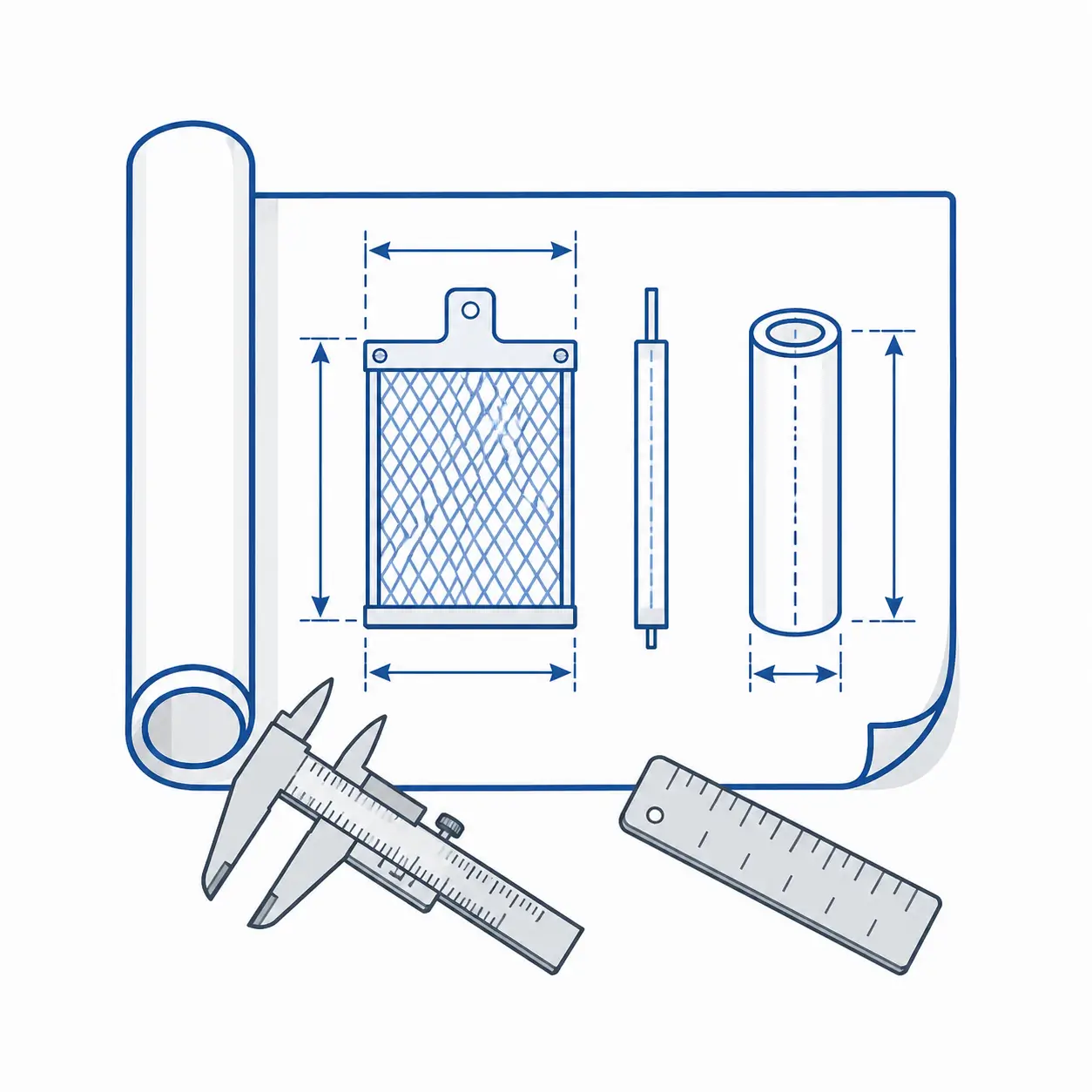
Engineer reviewing anode drawings

Custom Titanium Anode Engineering for Your Operating Conditions

Every electrochemical system has different operating conditions. Hele Titanium reviews electrolyte chemistry, current density, voltage, temperature, pH, target reaction, installation space, connection method, and service life target before recommending an anode coating and structure.

Coating Chemistry Review

Ru-Ir, Ir-Ta, platinum, or specialty coatings are reviewed according to the electrochemical reaction and electrolyte.

Titanium Substrate Preparation

Substrate grade, surface preparation, activation, cleaning, and coating adhesion are controlled before coating.

Current Distribution Design

Anode geometry, surface area, spacing, and connection layout are reviewed to support stable current distribution.

Connection & Assembly Design

Tabs, cables, threads, frames, welding, bolting, and mounting structures can be customized.

Testing & Documentation

Coating records, visual inspection, dimensional checks, and project-specific documents can be prepared when required.

Prototype to Production Support

Small samples, prototype electrodes, pilot testing support, and repeat production can be reviewed according to project needs.

Request Anode Engineering Review
The Titanium Anode Quality Protocol

Quality Assurance for Coated Titanium Anodes

Coated titanium anode quality depends on titanium substrate preparation, coating formulation, thermal treatment, coating loading, surface condition, dimensional accuracy, and final documentation.

1
1

Titanium Substrate Inspection

Titanium substrate material inspection before coating
  • Review grade, dimensions, and surface condition
  • Verify preparation requirements
  • Conduct inspections before coating
2
2

Surface Preparation & Activation

MMO coating application or multi-pass coating process
  • Control cleaning and roughening processes
  • Manage activation and pre-treatment
  • Support optimal coating adhesion
3
3

Coating Application Control

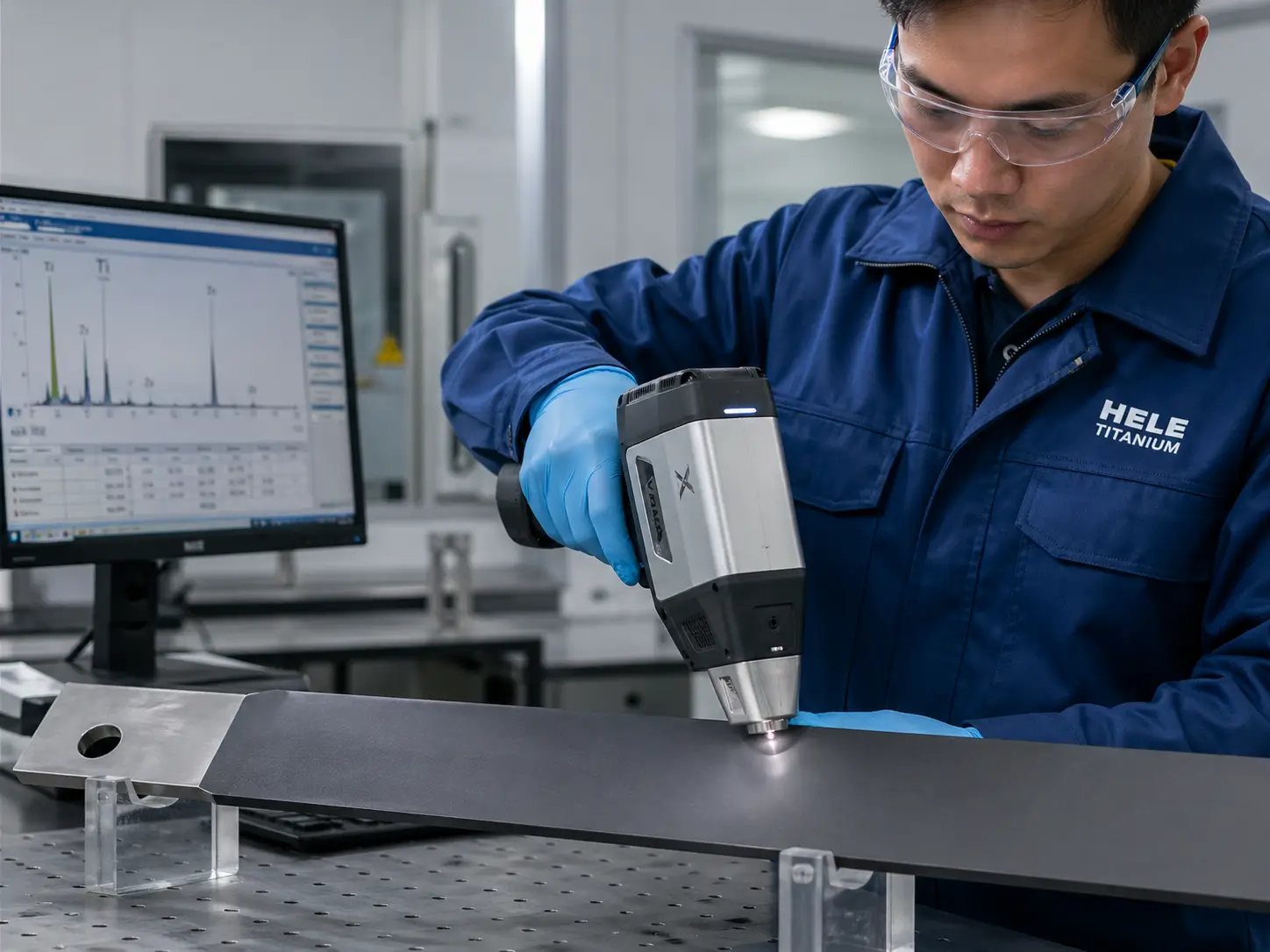
XRF instrument checking coating thickness
  • Control coating solution and application cycle
  • Manage drying and thermal treatment
  • Adapt processes according to coating type
4
4

Coating Loading & Surface Review

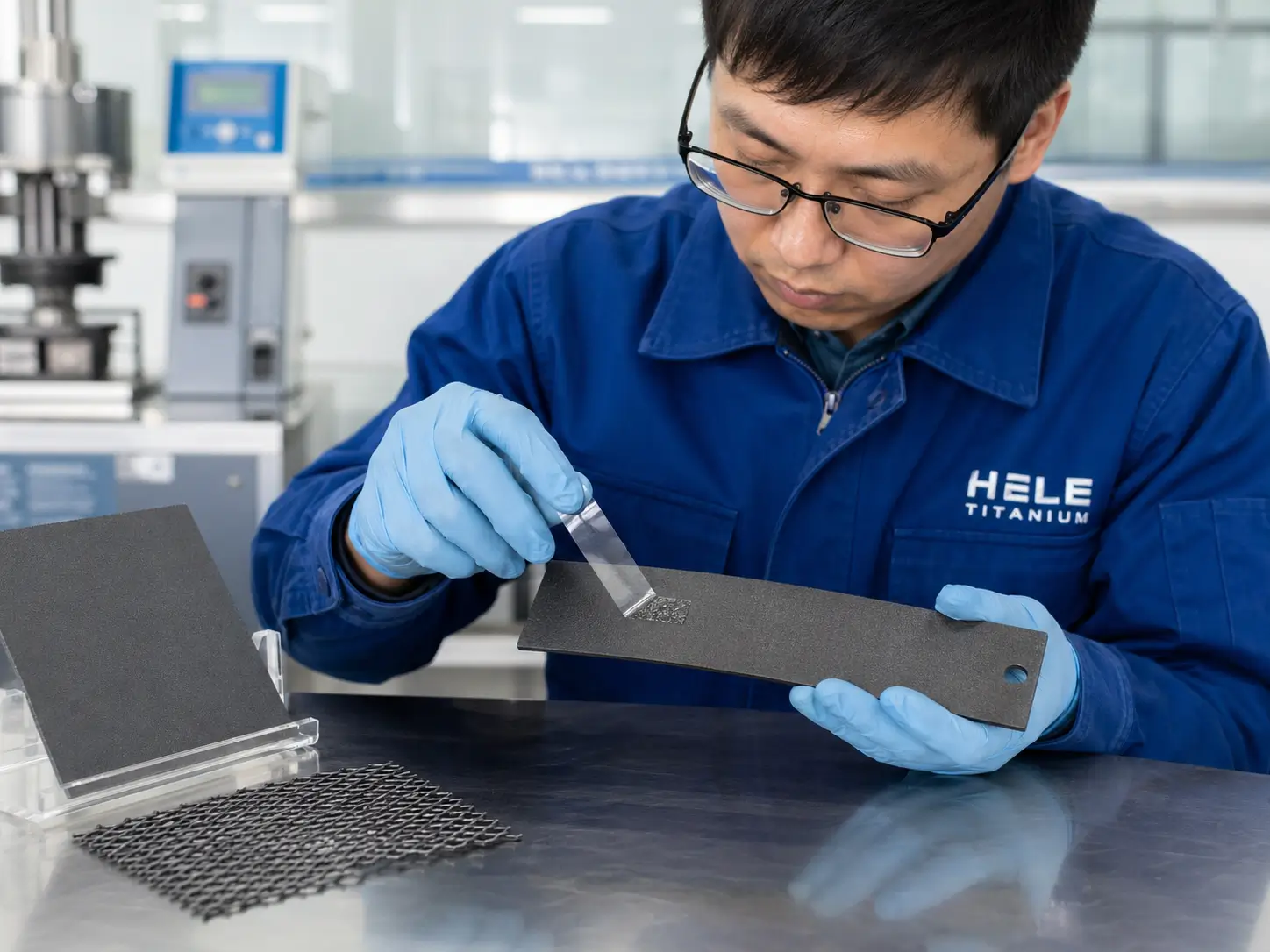
Tape test / bend test / adhesion inspection
  • Review coating area and loading target
  • Inspect surface condition and visual appearance
  • Verify according to project requirements
5
5

Electrical / Performance Testing

Electrochemical test cell with power supply and data screen
  • Support selected electrical checks
  • Conduct performance-related reviews
  • Test based on agreed inspection scope
6
6

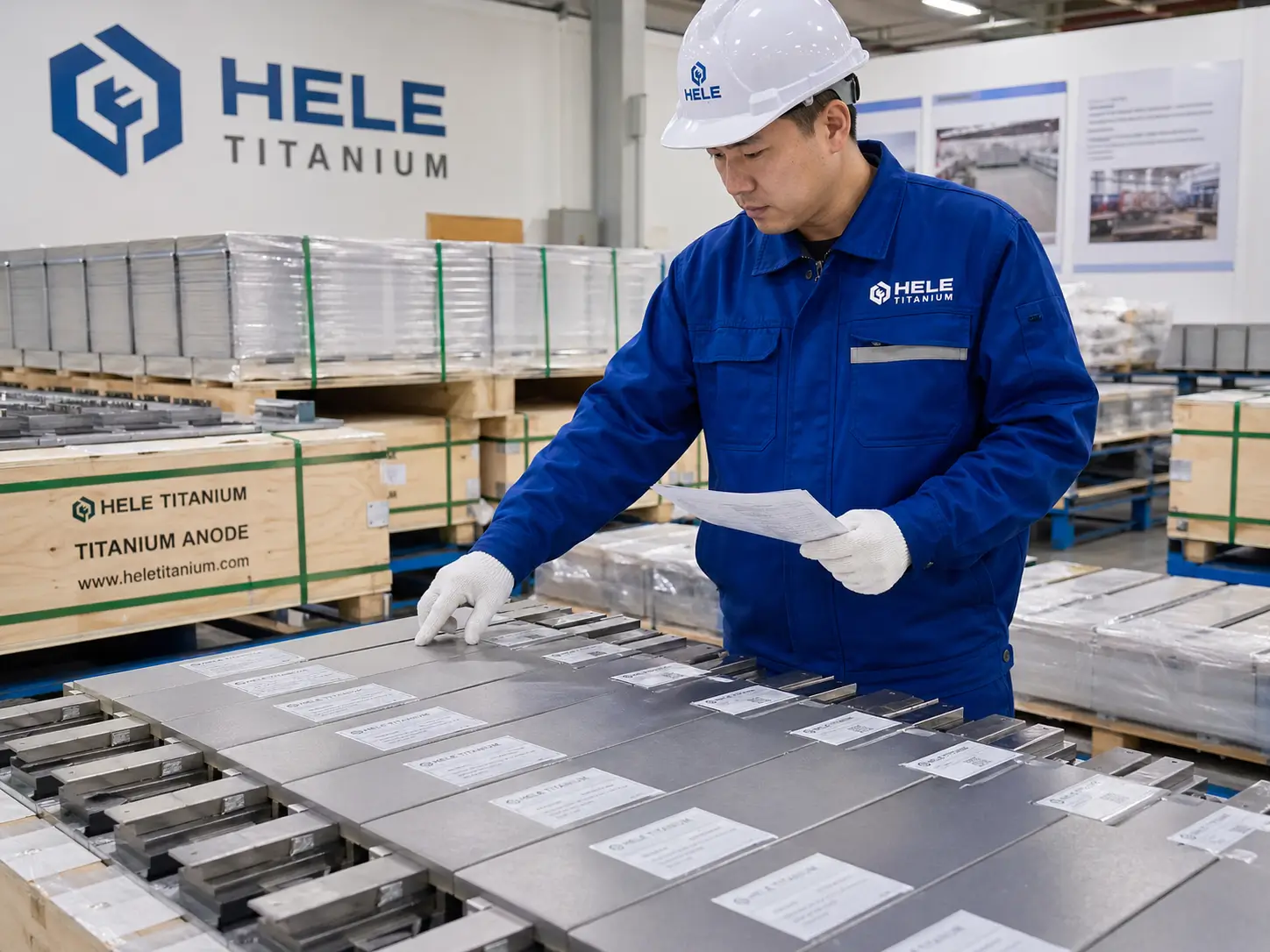
Final Documentation

Final Documentation and Packing
  • Prepare MTC and coating records
  • Compile inspection notes, labels, and packing lists
  • Provide project-specific documents when required

Coating-Specific Quality Logic

Ru-Ir Coating

Focus on XRF loading, chloride-media durability, chlorine evolution compatibility, adhesion, and ALT support for sodium hypochlorite, salt chlorination, and seawater electrolysis projects.

Ir-Ta / IrO₂ Coating

Focus on OER stability, coating uniformity, adhesion, XRF loading, and ALT support for cathodic protection, water treatment, electrowinning, and oxidation systems.

Platinized Titanium

Focus on platinum loading or thickness review, surface uniformity, adhesion, and electrical continuity for high-purity and special electrochemical applications.

Custom Assemblies

Focus on dimensional accuracy, weld or connection checks, active area verification, drawing compliance, and final packing review for OEM and replacement projects.

Available Documents
May Include

We provide comprehensive documentation to ensure traceability and quality assurance based on project requirements.

Request Quality Documents
MTC (Material Test Certificate)
Coating specification or coating record
Dimensional inspection record
Visual inspection notes
Packing list
Product labels
Project-specific QC documents
Third-party inspection support when required

What Affects Titanium Anode Cost?

Whether reviewing a standard MMO anode cost, a platinized titanium anode cost, or a custom titanium anode quotation, the final titanium anode cost depends on coating chemistry, precious metal loading, substrate size, anode form, current density, design life, connection structure, testing and documentation requirements, and order quantity. Understanding these factors helps buyers compare quotations based on total operating value, not only unit price.

Coating Chemistry

Ru-Ir, Ir-Ta, platinum, and specialty coatings have different precious metal content, catalytic behavior, and process requirements.

Precious Metal Loading

Higher coating loading or longer design life requirements may increase material and coating process cost.

Anode Form & Size

Mesh, plate, tube, rod, ribbon, and custom assemblies require different substrate preparation and fabrication routes.

Current Density & Service Life

Operating current density and expected service life affect coating selection, coating loading, and anode surface area.

Connection & Assembly

Cables, tabs, frames, threads, welding, sealing, and custom mounting structures affect manufacturing complexity.

Testing & Documentation

Inspection, coating records, certificates, third-party inspection, and export documents may affect total project cost.

Procurement Insight

The lowest anode price is not always the lowest operating cost. Correct coating selection, current distribution, and anode form can help reduce premature failure, maintenance, and replacement risk.

How We Review a Custom Titanium Anode Request

A reliable anode quotation starts with understanding the process, not only the size. Our team reviews operating conditions, coating chemistry, structure, connection, documentation, and delivery requirements before recommending a solution.

Understand Process Chemistry
1

Understand Process Chemistry

Review electrolyte, pH, chloride concentration, conductivity, temperature, target reaction, and operating hours.

Select Coating & Titanium Substrate
2

Select Coating & Titanium Substrate

Recommend Ru-Ir, Ir-Ta, platinum, or specialty coating and suitable titanium substrate based on application.

Design Form, Connection & Current Distribution
3

Design Form, Connection & Current Distribution

Review mesh, plate, tube, rod, ribbon, custom assembly, surface area, spacing, cable, tab, and mounting requirements.

Confirm Testing, Documentation & Delivery
4

Confirm Testing, Documentation & Delivery

Confirm inspection scope, coating records, MTC, labels, packing, shipping method, and delivery destination.

Why Global Buyers Choose Hele Titanium for Titanium Anodes

Hele Titanium supports international industrial buyers with coated titanium anode manufacturing, coating selection, custom geometry, quality testing, and export-ready documentation.

Factory-Direct Anode Manufacturing

Titanium substrate preparation, coating, assembly, inspection, and packing are supported through one manufacturing system.

Multiple Coating Options

Ru-Ir MMO, Ir-Ta MMO, platinized titanium, and project-specific coating options can be reviewed.

Custom Forms & Assemblies

Mesh, plate, tube, rod, ribbon, wire, disc, and drawing-based assemblies can be customized.

Application-Based Engineering

Anode design is reviewed according to electrolyte, current density, service environment, and design life.

Documentation Support

MTC, coating records, inspection notes, labels, packing lists, and QC documents can be prepared when required.

Global Delivery Support

Export packing, shipment documents, and international delivery coordination are available for global buyers.

From Titanium Substrate to Finished Anode

Every titanium anode project follows a controlled production route, from titanium substrate preparation and coating treatment to connection design, packing, and delivery. This workflow helps buyers understand how custom MMO, platinized, and specialty coated titanium anodes are prepared for real electrochemical applications.

1
Titanium Substrate Preparation

Titanium Substrate Preparation

Titanium plate, mesh, tube, rod, ribbon, or custom substrate is prepared according to the required anode form, dimensions, coating area, and installation method.

  • Titanium material form selection
  • Cutting, machining, or forming
  • Surface preparation before coating
2
Coating & Thermal Treatment

Coating & Thermal Treatment

MMO coating, platinized titanium anode treatments, or specialty coatings are applied based on the electrochemical reaction, followed by controlled thermal treatment.

  • Coating chemistry preparation
  • Coating application cycles
  • Drying and thermal treatment
3
Assembly & Connection

Assembly & Connection

Tabs, cables, frames, brackets, or mounting structures are added according to system design, current distribution, and custom titanium electrode assembly needs.

  • Cable or tab connection
  • Frame or mounting structure
  • Custom electrode assembly
4
Packing & Delivery

Packing & Delivery

Finished titanium anodes are protected, labeled, and prepared for export shipment according to product form, destination, and global delivery requirements.

  • Protective export packing
  • Product labeling
  • Global delivery support

Have a custom anode drawing or process requirement?

Start Production Review

Frequently Asked Questions About Titanium Anodes

Find quick answers about coating selection, lifespan, quality testing, custom design, operating limits, and supplier evaluation.

How do I choose between Ru-Ir, Ir-Ta, Pt/Ti, and PbO₂ coatings?
Selection depends on electrolyte composition and operating conditions. Ru-Ir is optimal for chloride environments (chlorine evolution). Ir-Ta excels in acidic sulfate solutions (oxygen evolution). Pt/Ti is chosen for high-purity requirements at high current densities, while PbO₂ is reserved for highly corrosive, strong acid environments requiring high oxygen overpotential.
What coating is best for chlorine evolution?
Ru-Ir (Ruthenium-Iridium) mixed metal oxide (MMO) coatings are the standard for chlorine evolution. They offer low overpotential and high stability in chloride-rich electrolytes like brine, typically operating efficiently at pH 2-4 and moderate current densities.
What coating is best for oxygen evolution?
Ir-Ta (Iridium-Tantalum) MMO coatings are the premier choice for oxygen evolution. Tantalum provides structural stability to the Iridium oxide matrix, preventing passivation in strongly acidic sulfate electrolytes even at elevated temperatures and current densities.
How does coating loading affect service life?
Higher noble metal loading (measured in g/m²) increases the active surface area and delays the depletion of the catalytic layer. An optimized loading thickness ensures sustained conductivity and protects the titanium substrate from passivation, directly extending the target service life under specific current density and temperature conditions.
Can you manufacture anodes for sodium hypochlorite generators?
Yes, we engineer Ru-Ir coated titanium anodes specifically for sodium hypochlorite generation. These are optimized for 2-3% brine electrolysis, ensuring high current efficiency and long service life under typical reverse-polarity or continuous operation conditions.
What anodes are used for ICCP systems?
Impressed Current Cathodic Protection (ICCP) systems typically utilize MMO-coated titanium tubular, ribbon, or mesh anodes. Ir-Ta coatings are used for soil and freshwater (oxygen evolution), while Ru-Ir or mixed coatings are selected for seawater applications (chlorine evolution).
What anodes are suitable for electrowinning?
Ir-Ta coated titanium anodes are widely used in electrowinning of base metals (copper, zinc, nickel) from sulfate solutions. They offer a stable, low-overpotential alternative to traditional lead-alloy anodes, eliminating lead contamination and reducing energy consumption.
Can MMO anodes be used for wastewater oxidation?
Yes. Advanced electro-oxidation for wastewater treatment typically employs Ir-Ta, Pt/Ti, or customized MMO formulations. These anodes efficiently generate hydroxyl radicals or strong oxidants to degrade complex organic pollutants, depending on the effluent's pH, conductivity, and chloride concentration.
Can you provide XRF coating reports?
Yes. We use X-Ray Fluorescence (XRF) analysis to accurately verify the noble metal composition and coating thickness (loading in g/m²). This ensures the coating meets the precise specifications required for your target service life and operating current density.
Do you perform accelerated life testing?
Yes, we conduct Accelerated Life Testing (ALT) in standard aggressive electrolytes (e.g., 1M H₂SO₄ or 1M NaOH) at high current densities (e.g., 20,000 A/m²). This empirical data helps predict the actual service life under your specific operating conditions.
How do you test coating adhesion?
We perform rigorous adhesion tests, including standard tape peel tests and 180-degree bend tests on sample coupons. These verify that the MMO layer is securely bonded to the prepared titanium substrate, preventing delamination during operation.
What documents come with shipment?
Standard documentation includes a Material Test Report (MTR) for the ASTM-grade titanium substrate, an XRF Coating Analysis Report, and a comprehensive Certificate of Conformity (CoC) validating that all dimensional and electrochemical specifications have been met.
Can you manufacture titanium anodes from drawings?
Absolutely. We fabricate custom titanium substrates—including plates, meshes, tubes, and complex cell geometries—to precise dimensional tolerances based on your CAD drawings. All machining, welding, and surface preparation are completed prior to coating.
What information is needed for a quote?
For an accurate technical quote, please provide the electrolyte composition, operating pH, temperature, current density (A/m²), target service life, required coating type (if known), and detailed dimensional drawings of the anode structure.
What affects titanium anode price?
Primary cost factors include the global market price of noble metals (Ruthenium, Iridium, Platinum), the required coating loading (which dictates service life), the complexity of substrate fabrication, and the overall order volume.
Can worn titanium anodes be recoated?
Yes. Depleted anodes can be returned to be stripped, etched, and recoated. If the underlying titanium substrate remains mechanically sound and unpassivated, recoating restores original electrochemical performance at a lower cost than manufacturing new anodes.

Titanium Anode Procurement Guide for Engineers & Industrial Buyers

Reading Time: 8–10 min Buyer Type: Engineers / OEMs / EPCs / CP Contractors / Electrochemical System Integrators
Product Scope: Coated Titanium Anodes, MMO, Ru-Ir, Ir-Ta, IrO₂, Pt/Ti & Custom Assemblies
RFQ Focus: Application, Coating, Substrate, Current Density, Geometry & Design Life

When your system depends on stable efficiency, long-term durability, and resistance to aggressive electrolytes, the right titanium anode is not just a part — it is the backbone of performance and profitability. This guide helps engineers and procurement teams navigate the broad category of titanium anodes, evaluating coatings, geometries, operating limits, supplier quality, and lifecycle value.

Before You RFQ Titanium Anodes, Confirm These 4 Things:

  • Application: chlorination, oxygen evolution, plating, oxidation, or cathodic protection
  • Operating conditions: electrolyte, pH, temperature, and current density
  • Performance target: service life, voltage window, efficiency, and coating durability
  • Mechanical design: coating type, anode geometry, connection method, and drawing requirements

1. What Is a Titanium Anode?

Understanding the fundamental composition of a titanium anode is the first step in evaluating its suitability for your electrochemical process.

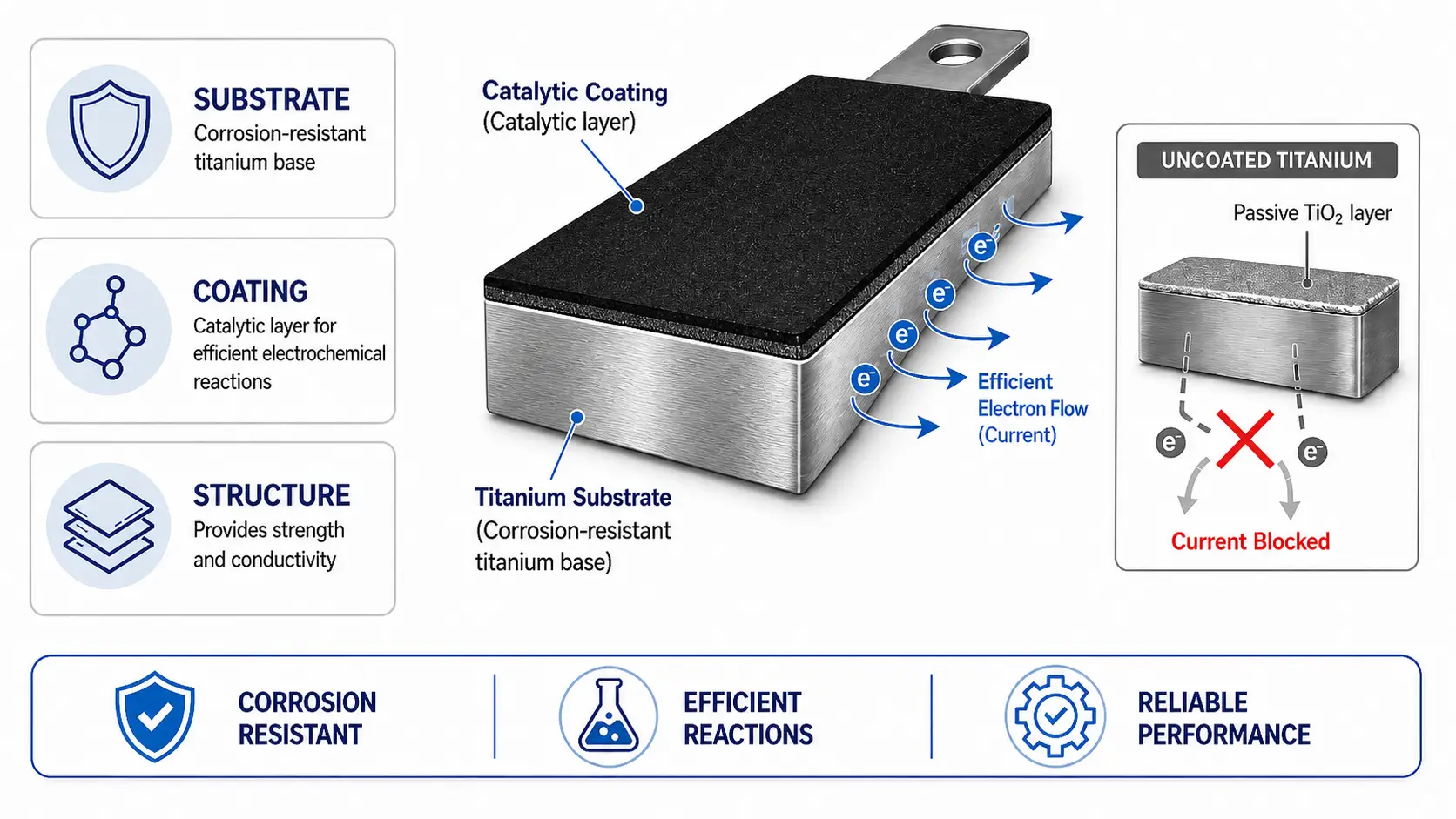
A titanium anode is a precision-engineered electrode composed of a corrosion-resistant titanium substrate and a highly active catalytic coating.

  • Substrate: Pure titanium alone forms an insulating titanium dioxide layer under anodic polarization, halting current flow.
  • Coating: The catalytic coating ensures desired electrochemical reactions occur efficiently.
  • Structure: Titanium provides the necessary structural integrity and conductivity.

Titanium Anode Cross-Section
Titanium Anode Cross-Section

Figure: Schematic representation of a Dimensionally Stable Anode (DSA)

2. Titanium Anodes vs MMO Anodes

While often used interchangeably, "Titanium Anode" is the parent category, whereas "MMO Anode" is a specific—and the most common—type.

Titanium anodes refer to any electrode utilizing a titanium substrate due to its exceptional corrosion resistance and shape stability. MMO (Mixed Metal Oxide) anodes specifically feature a catalytic coating of precious metal oxides, such as Ruthenium or Iridium.

However, the titanium anode family extends beyond MMO. It also includes Platinized Titanium (Pt/Ti), Lead Dioxide (PbO₂) coated titanium, and Boron-Doped Diamond (BDD/Ti) anodes, each serving distinct electrochemical purposes where standard MMO might not be suitable.

3. Common Titanium Anode Coatings

The catalytic coating determines the anode's function. The most common coatings applied to titanium substrates include:

  • MMO (Mixed Metal Oxide): Typically composed of Ruthenium-Iridium (Ru-Ir) or Iridium-Tantalum (Ir-Ta). These are the industry standard for chlorine and oxygen evolution.
  • Platinized Titanium (Pt/Ti): A thin layer of pure platinum electroplated or clad onto titanium. Used for high-purity applications like precious metal plating or water ionization.
  • Lead Dioxide (PbO₂/Ti): Offers a high oxygen overpotential, making it ideal for aggressive organic oxidation, hydrometallurgy, and wastewater treatment.
  • Boron-Doped Diamond (BDD/Ti): Provides the widest potential window for extreme electrochemical oxidation processes.
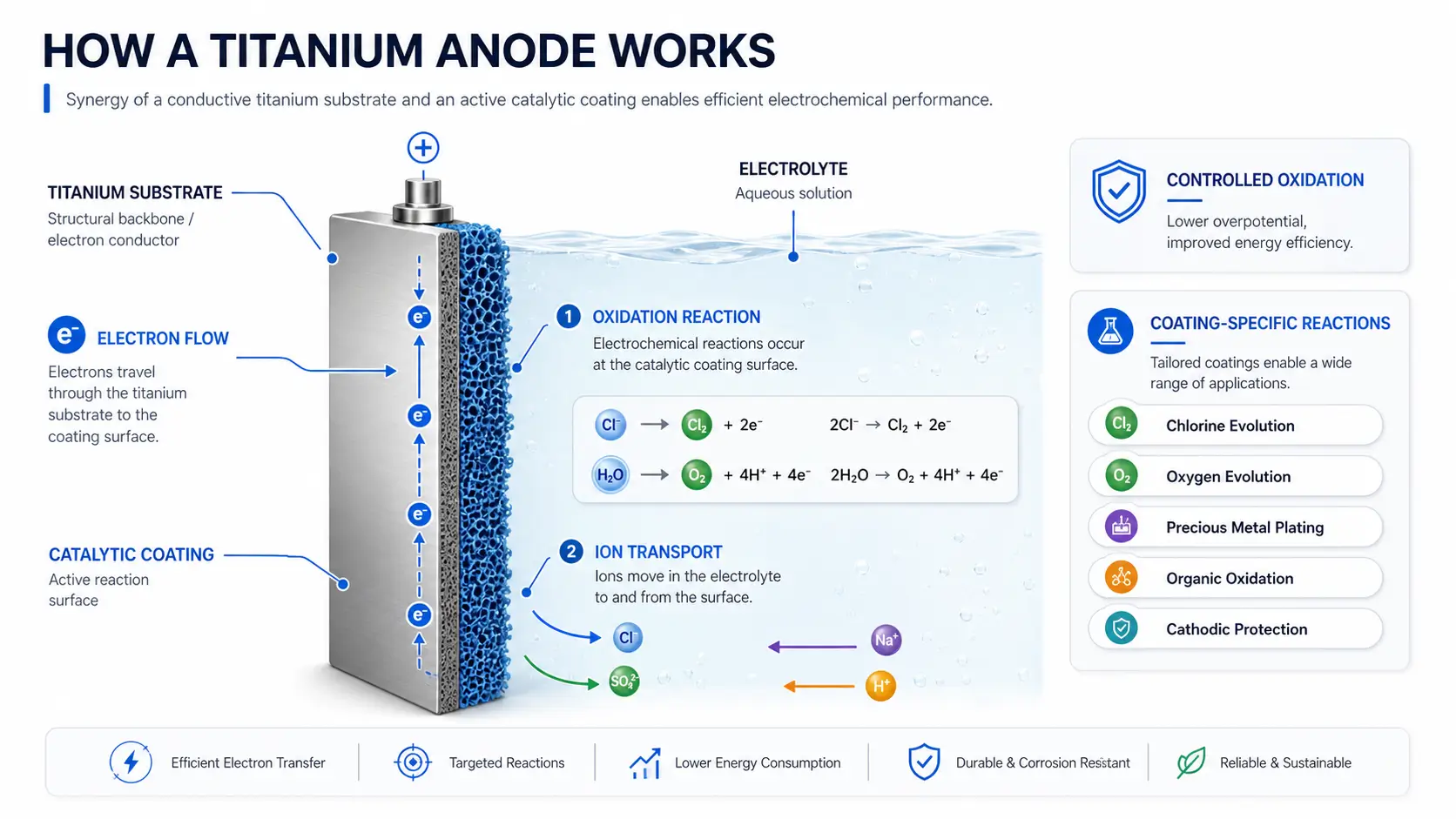
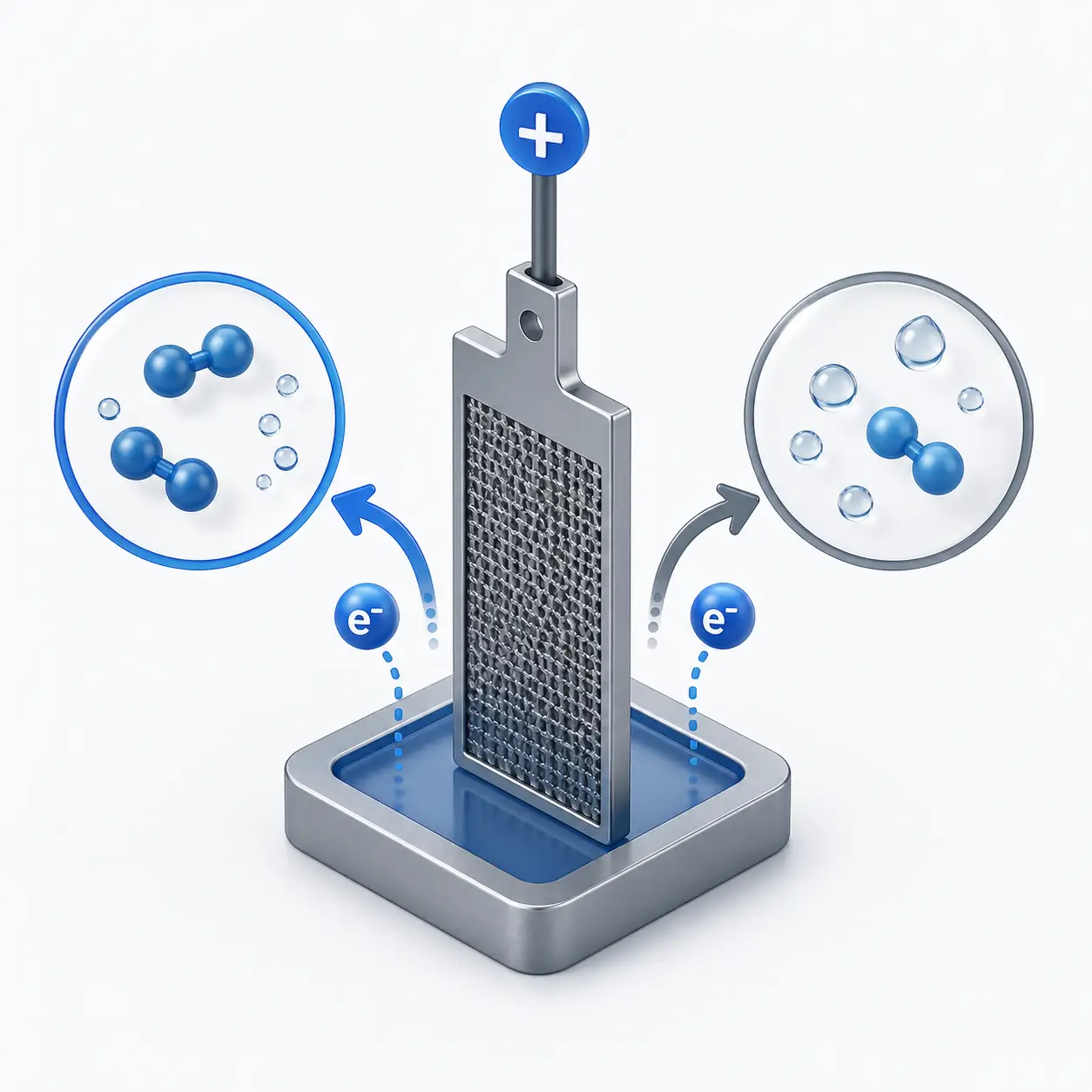
Electrochemical Mechanism of a Titanium Anode

Figure: The catalytic coating lowers the activation energy for specific oxidation reactions at the anode-electrolyte interface, while the titanium substrate rapidly conducts the released electrons away to the external circuit.

4. How to Choose Titanium Substrate

Selecting the correct grade and form of the titanium substrate ensures the mechanical integrity and formability required for your specific cell design.

Material / Form Standard Characteristics
Grade 1 Titanium ASTM B265 / B338 Highest purity and ductility. Ideal for complex deep drawing and expanded mesh forms.
Grade 2 Titanium ASTM B265 / B348 Standard industrial workhorse. Higher strength, widely used for plates, rods, and tubes.
Substrate Forms Various Available as plate, expanded mesh, seamless tube, solid rod, and wire.

5. How to Choose Anode Form

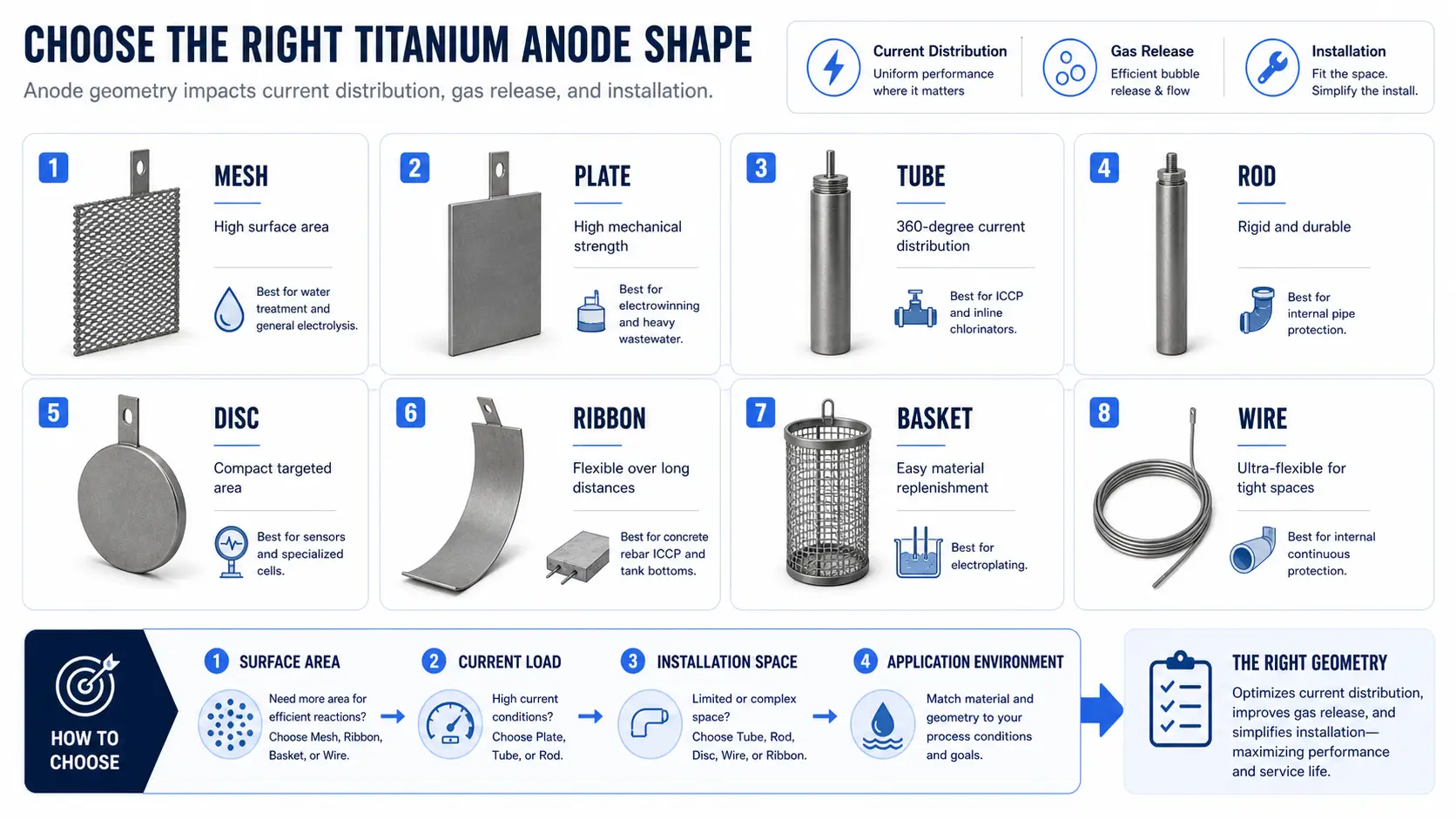
Anode geometry directly impacts current distribution, gas release, and installation. Optimize the shape to fit your unique operational constraints.

Geometry Geometry Strength Design Benefit Best Use Case
Mesh High surface area, lightweight Excellent gas bubble release Water treatment, general electrolysis
Plate High mechanical strength Handles high current loads Electrowinning, heavy wastewater
Tube 360-degree current distribution Easy to seal in pipes ICCP, inline chlorinators
Rod Rigid and highly durable Easy to machine and thread Internal pipe protection
Disc Compact, targeted area Fits specialized cell housings Sensors, specialized cells
Ribbon Flexible, covers long distances Distributed current network Concrete rebar ICCP, tank bottoms
Basket Holds sacrificial metals Easy material replenishment Electroplating
Wire Ultra-flexible, continuous Fits tight, complex spaces Internal continuous protection
Titanium Anode Shapes and Geometries

Figure: Various titanium anode geometries designed to optimize current distribution and fit specific operational constraints.

6. Application-Based Selection

Selecting the right titanium anode starts with the application. The operational environment dictates the reaction, which in turn dictates the coating and form.

Every electrochemical system is unique. When selecting an anode based on your application, consider the following:

  • Electrolyte Composition: Is it seawater, brine, acidic, or rich in organics? Chlorides typically require Ru-Ir, while sulfates require Ir-Ta.
  • Current Density: High-current applications (like electrowinning) demand robust plate or tubular forms with thicker coatings, while low-current applications (like water ionizers) can use delicate meshes.
  • Installation Space: Confined spaces might require flexible wire or ribbon anodes, whereas large open tanks benefit from rigid plate or basket designs.

7. Coating Selection by Reaction

Matching the coating formulation to your primary reaction is critical for performance and longevity.

Coating Type Primary Reaction Operating Environment Main Advantage Limitations Best Applications
Ru-based MMO Chlorine Evolution Chlorides / Brine High efficiency for Cl₂ generation Poor in pure O₂ evolution Chlor-alkali, pool chlorinators
Ir-based MMO Oxygen Evolution Acidic / Sulfates Extremely stable in aggressive acids Higher precious metal cost Electrowinning, ICCP
Pt/Ti High-Purity Reactions Various Insoluble, ultra-high purity High cost, sensitive to ripples Plating, water ionizers
PbO₂/Ti Strong Oxidation High Organics High overpotential for O₂ Heavy, uses toxic precursors Wastewater, hydrometallurgy
BDD/Ti Extreme Oxidation Complex Water Widest potential window Very high cost, brittle Advanced oxidation processes

Procurement Tip

If you are not sure which coating to choose, start by identifying the dominant reaction. Ru-Ir is commonly used for chlorine evolution, Ir-Ta and IrO₂ are commonly used for oxygen evolution and oxidation systems, while platinized titanium (Pt/Ti) is used for high-purity or special electrochemical applications.

Get Your Custom Titanium Anode Solution

Tell us your application, electrolyte chemistry, operating current density, anode size, coating preference, and expected service life. Hele Titanium will help review the suitable titanium anode type, coating system, structure, documentation, and quotation path.

Factory-Direct Titanium Anode Manufacturing
MMO & Platinized Titanium Coating Options
Custom Mesh, Plate, Tube, Rod & Ribbon Anodes
Engineering Review, Documentation & Export Support

Direct Engineering Support

sales@heletitanium.com

Supported formats: PDF, JPG, PNG, STEP, IGES, STL, DWG (Max 20MB)

Your information is secure and will only be used to process your inquiry.